Portugues
RockWeave
Saved games stay in this browser only.
About the game
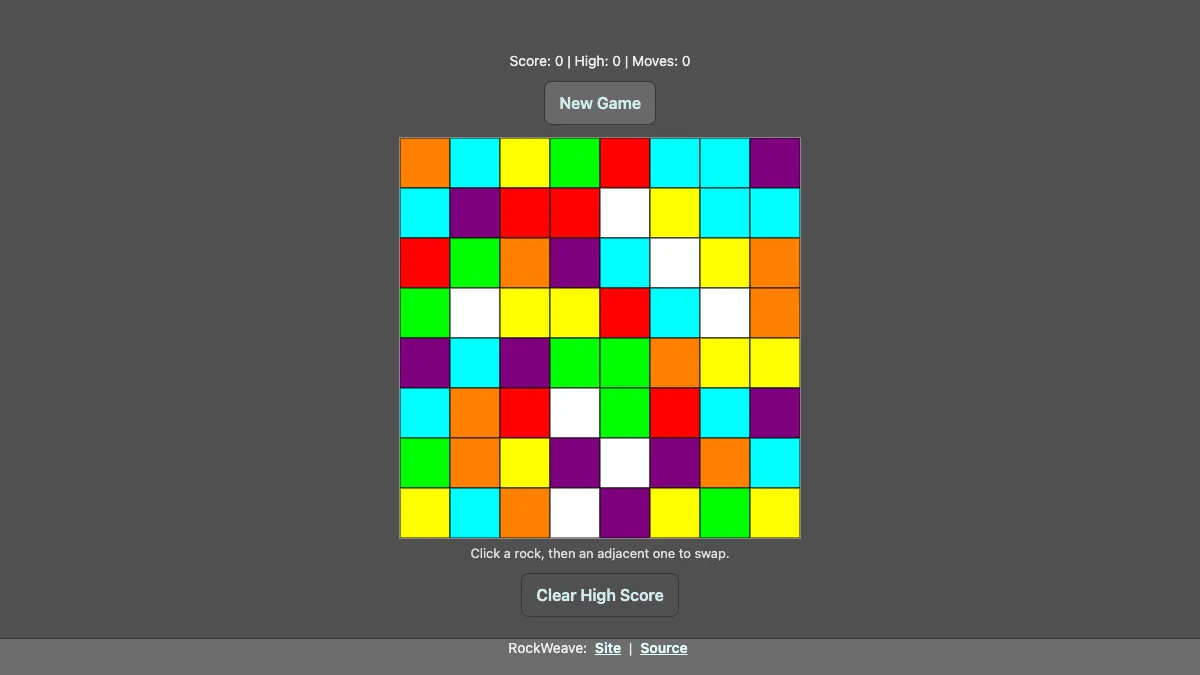
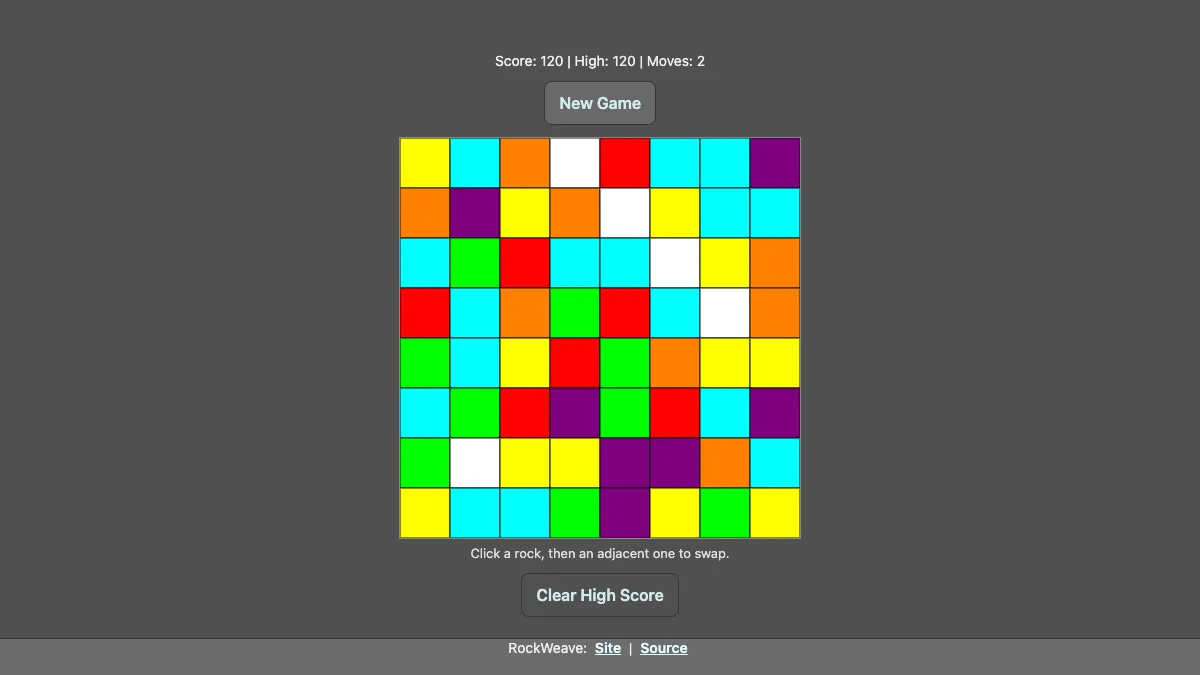
An eight-by-eight board filled with coloured rocks. Swap two neighbours so that three or more of the same colour line up in a row or a column, and they break: the rocks above fall into the gap and new ones drop in, which can set off more matches on their own. Each rock cleared is worth ten points.
Longer lines make special rocks. Four in a row leaves behind a star rock, and when a star rock is later cleared it also breaks the eight rocks around it. Five in a row makes a diamond rock, and clearing a diamond wipes every rock of its colour from the board. The game ends when no swap on the board can make a match.
There are no images or sounds: everything is drawn in code on a canvas, which keeps the game small and quick to load on a phone.
Playing it here
Click Play and start swapping. The score, your best score and the number of moves are shown above the board, and the best score is kept in this browser.
Controls
| Input | Action |
|---|---|
| Tap / click a rock, then a neighbour | swap the two |
| Slide a rock onto a neighbour | swap the two |
| New Game | deal a fresh board |
| Clear High Score | reset the saved record |
A few things worth knowing
Only matching swaps count. A swap that doesn't line up three rocks is not a move; look for a rock that is one step away from completing a line.
Work near the bottom. Matches low on the board make everything above fall, which gives cascades a better chance.
Save diamonds for a crowded colour. A diamond clears every rock of its colour, so it scores most when that colour is everywhere.
FAQ
When is the game over? When there is no swap left anywhere on the board that would make a match. New Game then deals a fresh board.
Does it work on a phone? Yes. Swaps are made by tapping or sliding with a finger, and the board fits the screen.
What do the star and diamond rocks do? A star rock (from four in a row) also breaks its eight neighbours when cleared; a diamond rock (from five) clears all rocks of its colour.
Credits and licence
RockWeave ("Marley's Match-3") was written by Denise Case and released under the MIT licence. We build it from the repository and remove the Google Analytics tag of the original page; we also removed the "Updated" time stamp from the score line, which only showed when the page was opened. The licence text is linked from this page and the source is on GitHub.
Screenshots