
 Portugues
Dungeon Deck
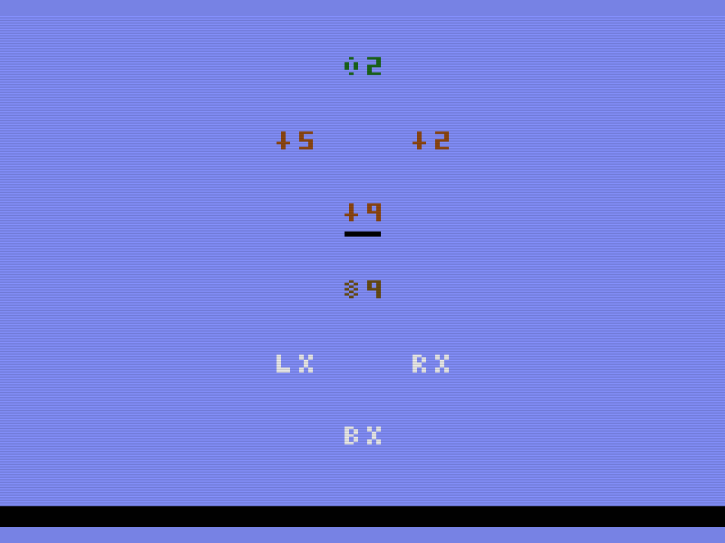
Saved games stay in this browser only.
About the game
The dungeon is a shuffled deck of 45 cards, and you go through it one room at a time. Each room deals four cards across the top of the screen; clear three of them and the next room is dealt, with the fourth card carried along. Below the room sits your own card, showing your hit points (you start with 9), and three empty slots: a left hand, a right hand and a backpack.
There are four kinds of card, each with a number. A monster placed on your card hits you for its full power, and if that power is equal to or higher than your hit points, the run is over. A sword in one of your hands can be dropped on a monster to cut its power by the sword's value, killing it when the sword is strong enough. A shield in hand absorbs a monster dropped on it, and only the excess gets through to you. A potion heals you the moment you equip it, up to 9 hit points.
Clear every card in the deck and you win; your score is the difficulty bonus plus whatever you sacrificed along the way. It is a game of small sums and hard choices, where deciding which card to leave behind matters as much as which to take.
Playing it here
This is a homebrew game made for the Atari 2600: a new game by independent developers for the 1977 console, not a commercial release. The author wrote it in 2025 for an Atari 2600 programming class. It runs here in Stellerator, an Atari 2600 emulator written in JavaScript. Click Play now, choose the difficulty with Backspace if you like, and press Enter to deal the first room.
There are no save states on this platform: like on the real console, a game lasts as long as you keep playing, and P pauses it. A gamepad works too.
Controls
| Key | Atari 2600 | Action |
|---|---|---|
| Arrow keys / WASD | Joystick | move the cursor |
| Space or V | Joystick button | pick up a card; press again to drop it (drop it on itself to cancel) |
| Enter | Game Reset | start a game; during play, back to the title |
| Backspace | Game Select | on the title, change the difficulty; in a fresh room, run away |
| P | — | pause |
A few things worth knowing
Six difficulty levels. The number on the title screen goes from 0 to 5: easy, normal and hard, then the same three with a timer. Harder levels give a bigger bonus when you win; easy gives none.
Timed levels. Two bars count down while you think, and each time they run out you lose 1 hit point. They reset when you clear a room or run away.
Running away has a price. Before touching any card in a new room you can flee with Backspace. It costs 2 hit points and sends the four cards to the bottom of the deck, to be faced later.
Cards in the backpack do nothing. Only the two hands count as equipped, but the backpack is a good place to keep a strong sword or shield for later. Moving a card between hands and backpack is free; cards never go back to the room.
Sacrifice for points. Dropping a sword, shield or potion from your hands or backpack onto your own card discards it and adds its value to your score. Score only counts if you make it to the end.
The end screen. When the run ends, the game shows two numbers: cards left on the left and score on the right. XX in place of the cards left means you won; XX in place of the score means you fell. Press Enter to return to the title. On a real console the color/B&W switch also shows this screen mid-game; that switch is not mapped here.
Credits and licence
Dungeon Deck was designed and programmed in 6502 assembly by Joshua Pierre Bourgeot and released under the MIT licence. The licence text is linked from this page.