Portugues
Shoot 'em ups and shooters you can play free in your browser
Shooters are the most crowded corner of the arcade tradition, and also the one with the most confusing vocabulary. People say "shmup", "bullet hell", "twin-stick" and "fixed shooter" as if everyone knew the difference. This guide sorts those words out, explains the few ideas that make these games tick (hitboxes, power-ups, bombs, scoring), and walks through a dozen free shooters on FredyGames that you can play in your browser, from a one-minute bullet-hell battle on a tiny handheld to a full first-person campaign. If you want the whole list, the shooter category has everything.
The words you will meet
Shoot 'em up, often shortened to shmup, is the umbrella term for games where you control one ship or character and the main verb is shooting. Usually the screen scrolls by itself, you cannot stop it, and enemies arrive in waves whether you are ready or not. The term is loosely applied: some people use it only for scrolling games, others for anything with a ship and a lot of enemies.
Hitbox is the area of a sprite that actually counts when something touches it. What you see on screen and what the game checks are two different shapes. In many shooters the ship's hitbox is much smaller than the drawing: bullets can brush the wings and nothing happens, and only a hit on the small core kills you. Once you know this, dense screens of bullets stop looking impossible. Some games show the hitbox as a dot; others expect you to learn where it is.
Bullet hell, from the Japanese danmaku, "curtain of bullets", is the style where enemies fire so many shots that the screen fills with slow, patterned projectiles. You are not expected to dodge everything by reflex. You read the pattern, find the gap, and move through it in small, careful steps, which is why the tiny hitbox matters so much there.
Power-up is any item that improves you for a while or for good: a stronger gun, a shield, a bonus multiplier, extra speed. Enemies often drop them when destroyed. Some games ask a question with them, such as whether to take the power-up now or wait for a better one.
Bomb is a limited panic button. It usually clears the bullets from the screen or hurts everything on it. You are meant to keep it for the moment you are cornered, not use it as a regular weapon.
Autofire means the gun fires on its own when you hold or tap a button. Some games remove the fire button altogether, so you only decide where to stand.
The main subgenres
Fixed shooters
The oldest form. The ship moves along one edge of a single screen that does not scroll, and the enemies move in formation above or around it. Space Invaders, from 1978, is the model that the whole genre grew from. The action is a puzzle in timing: which enemy to hit first, how long to wait, when the formation gets dangerous.
Vertical and horizontal scrollers
Here the world scrolls past while you shoot: upward in a vertical shooter, sideways in a horizontal one. Japanese players call these tate and yoko games, after the orientation of the arcade monitor. Vertical games tend to give you more room to see bullets coming. Horizontal games often involve terrain, which is one more thing to avoid besides enemy fire.
Bullet hell
This is the part of the scrolling shooter family where patterns take over. The ship is usually slow, the hitbox small, and a button lets you slow down further for precise steps. Because patterns repeat, bullet-hell games are learned more than reacted to.
Twin-stick and arena shooters
Movement and aim are separate. One hand moves the character, the other points the gun, which lets you run away from the enemies while shooting at them. On a console that means two sticks. In the browser it usually means the keyboard for walking and the mouse for aiming. These games take place in an arena rather than a scrolling level, and the challenge is crowd control.
First-person shooters
Not a shoot 'em up by the usual definition, but the same family on the shelf: aim, fire, collect, survive. We include one below because it is a free, complete game that shows how far the idea went.
Bullet hell in practice
Four games on the site make a good tour of the style, from friendly to cruel.
DT Danmaku 2
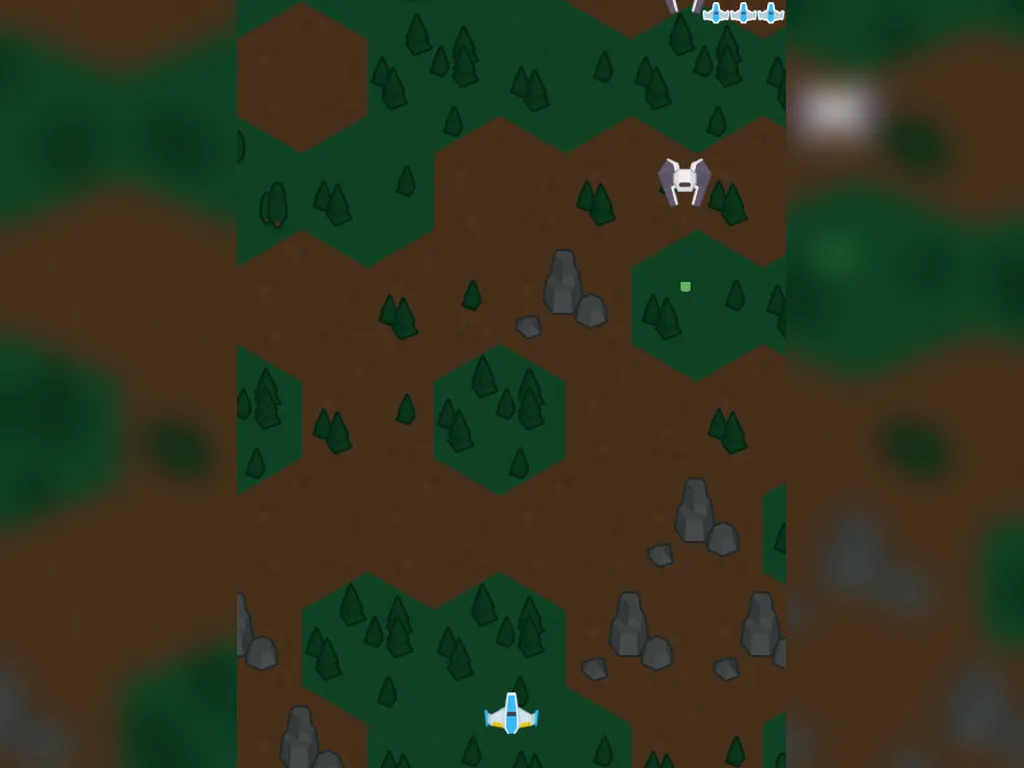
DT Danmaku 2 is a vertical bullet-hell game by dtsudo, made in 2021 and playable here in the page. A small ship flies up a landscape of hexagonal tiles, enemies enter from the top, and they answer with patterns that fill the screen. Only a few pixels at the centre of the ship can be hit.
- Arrow keys move, hold Z to shoot and hold Shift to slow time down.
- Use Shift when the pattern gets dense. It does not make you stronger, it just gives you finer control.
- Each enemy repeats its shots, so the second time you meet it is easier than the first.
- The game has bosses but no saves, so every run starts from the beginning.
Bullet Hell
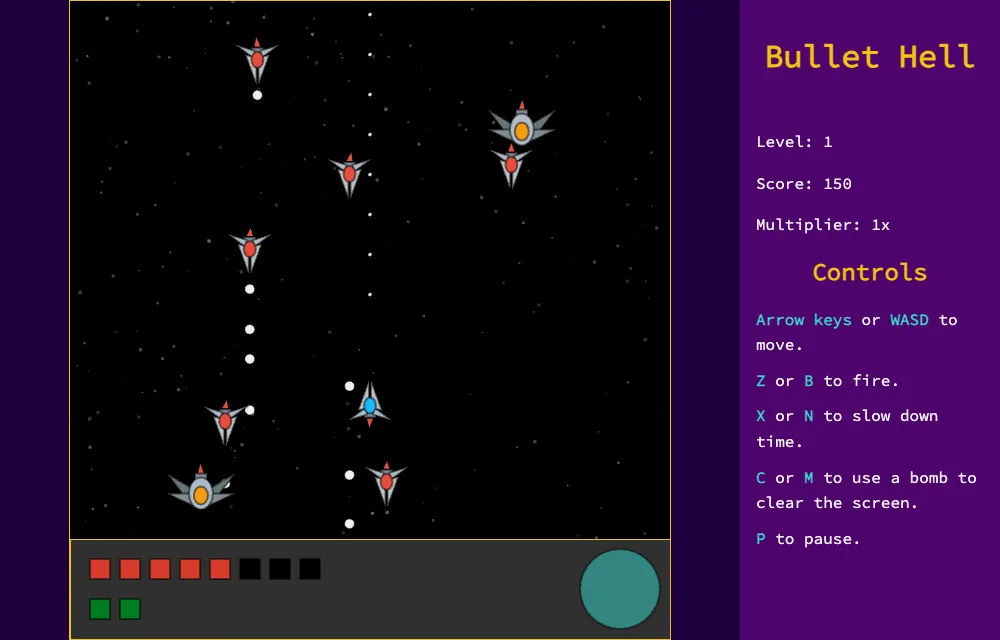
Bullet Hell (Amelia Clarke, 2020) is a good second step because it hands you more tools. You are a small blue ship at the bottom, six levels run in sequence and bosses close some of them. You can hold X to slow time for a few seconds, then wait for it to recharge, and C sets off a bomb that clears the bullets. Enemies drop points, health, bombs and a second gun.
- Use the time slowdown to cross a pattern that is impossible at full speed. The circle at the bottom shows how long the recharge has left.
- Keep one bomb for the boss. It only clears bullets, so use it before a boss fills the air instead of losing health.
- Stay close to the enemies you shoot down, since the items drop where they fall.
Tux Planet 2
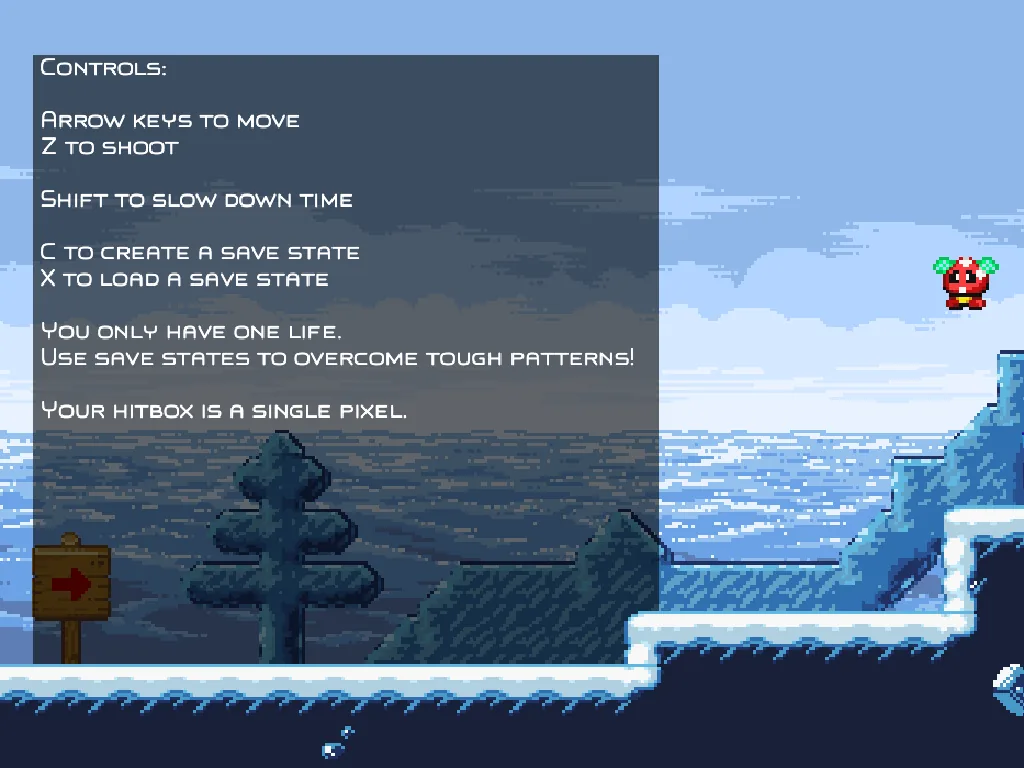
Tux Planet 2 is also by dtsudo, and it takes the idea to the hard edge. You play Konqi, the green dragon, over a snowy world map with three levels. You have one life and a one-pixel hitbox. In return you can slow time with Shift, press C to make a save state just before the hard part and X to load it again.
Parallaxia
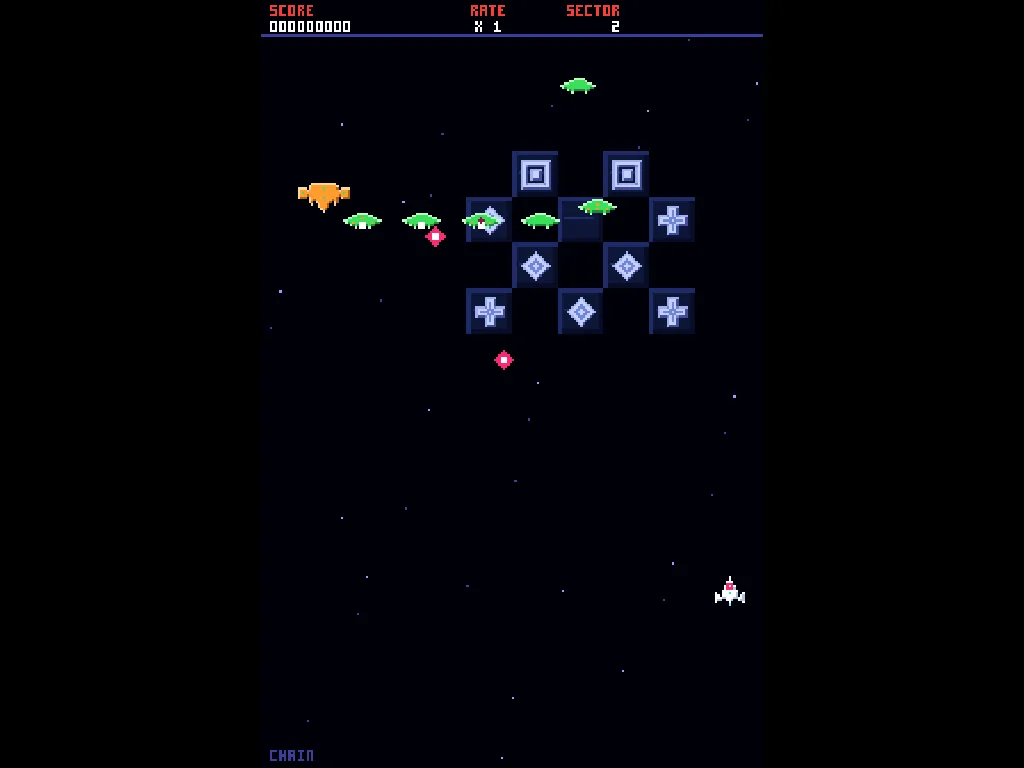
Parallaxia is by Kenta Cho (ABA Games), published in 2026, and it is the most modern design of the four. Sectors never end, and every fifth one has a boss whose wings can be shot off separately. Before you start you pick a scoring mode: CHAIN rewards wiping out a whole formation, CLOSE rewards shooting at point-blank range, and GRAZE rewards skimming past bullets. Holding fire locks onto large enemies, up to four at once, and releasing sends a laser at each of them.
- If you are new, start with CHAIN. It has fast but sparse bullets, and a ship that moves quickly.
- In CHAIN, a ship that escapes breaks the multiplier, so shoot the whole line before moving on.
- Near a boss, hold the button to collect locks and release when you have four.
Scrolling shooters with power-ups and routes
Chromium B.S.U.
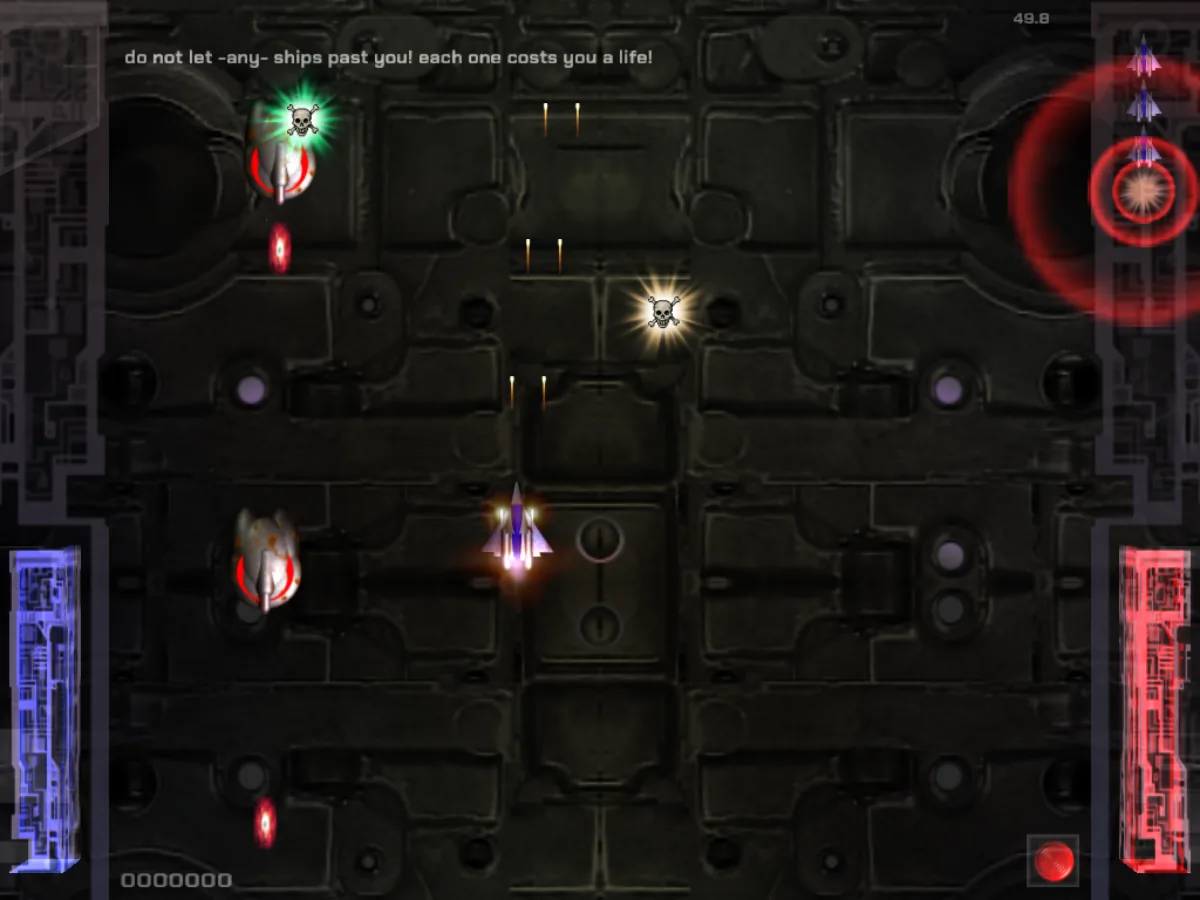
Chromium B.S.U. is a vertical shooter with a rule that changes how you play: nothing may get past you. Each enemy that reaches the bottom of the screen attacks your cargo ship and costs you a fighter, so you hunt ships down and sometimes ram them. It dates from 2000, was written by Mark B. Allan and is now kept alive by volunteers. Move with the mouse or the arrow keys, fire with the left button or Space. Skill levels run from "fish in a barrel" to "impossible".
Its power-up logic is unusual. Shields can be caught, but a shield drifting off the bottom of the screen is worth 10,000 points, and letting the super shields go by earns an extra fighter. Not every power-up is worth catching.
Powermanga
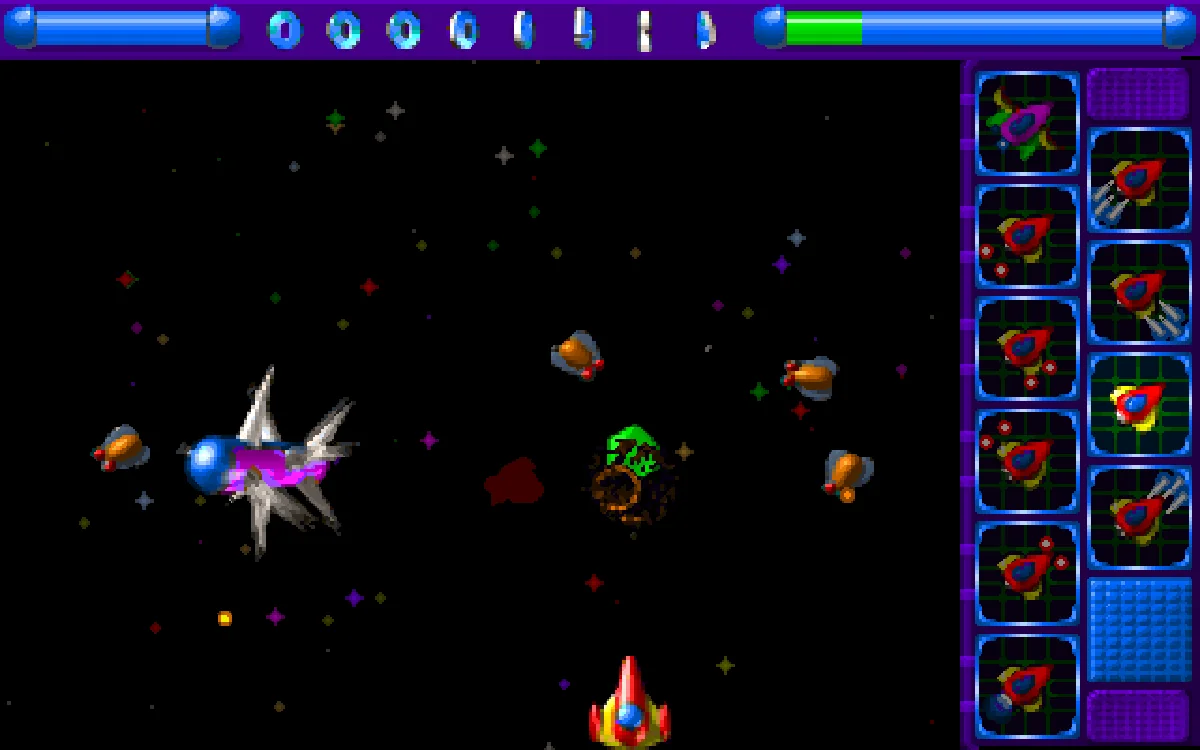
Powermanga (TLK Games, first released in 2000) has 41 waves and more than 60 kinds of enemies, plus a guardian every few waves. Its twist is the upgrade panel on the right: green and red gems move a highlight up the panel, and you press Ctrl to take the upgrade it sits on. More speed, more energy, stronger shots to the front, sides or rear, and at the top, a bigger ship. Waiting longer gets you a better upgrade, but also leaves you weaker in the meantime. The game suggests spending the first gems on firepower and energy instead of racing to the top.
GunTneR
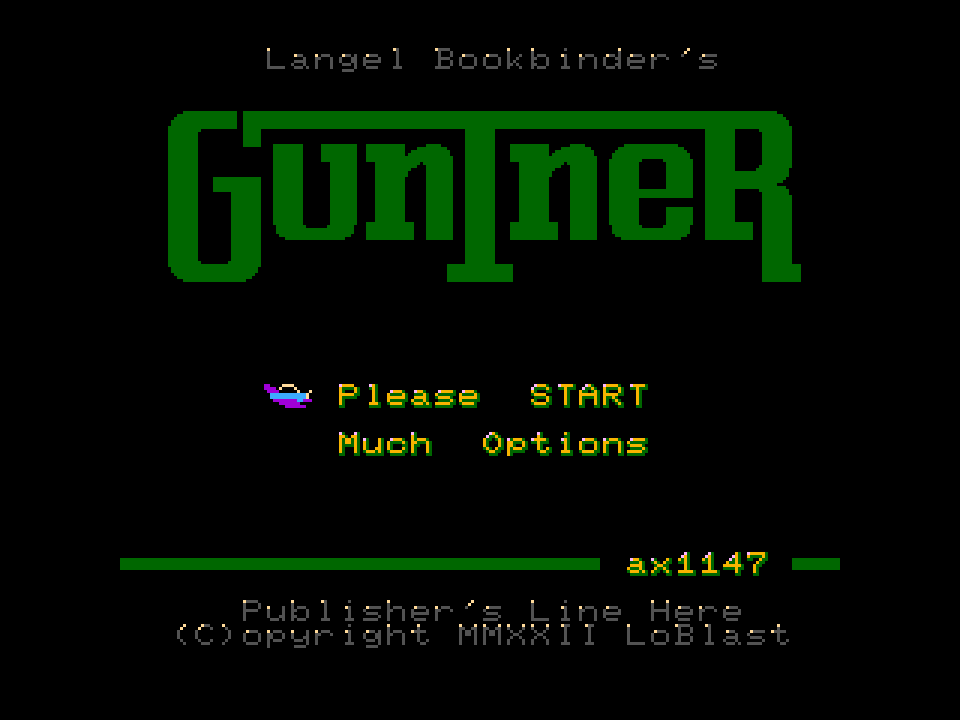
GunTneR is a free NES homebrew game by LoBlast, and a good example of a horizontal shooter against a clock. You fly the ship Rudy through a wormhole across 60 phases, 16 kinds of enemy and four bosses. A timer runs the whole time: under ten minutes gets the happiest of three endings. Z fires, X sprays rapid fire at the cost of your shield, and Select changes the ship's speed. For more console games like it, see our guide to NES homebrew.
ARDUBULLETs
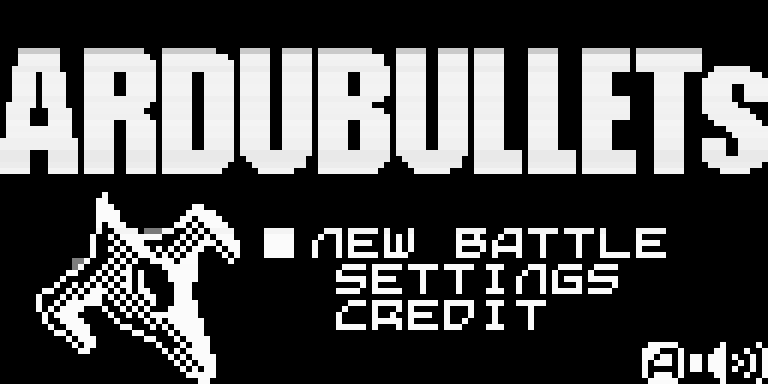
ARDUBULLETs squeezes a bullet-hell game into sixty seconds on the Arduboy, an open handheld with a tiny black-and-white screen. Twelve waves arrive, one every five seconds, and a single hit ends the battle. The fire button is also your brake: while you hold it you shoot and move slowly, so you release it to cross the screen and hold it for fine dodging. Every battle is generated from a code, and Retry replays the same one, so a hard battle can be learned wave by wave. The Arduboy and Uzebox guide covers the console itself.
Arena and twin-stick
Radius Raid
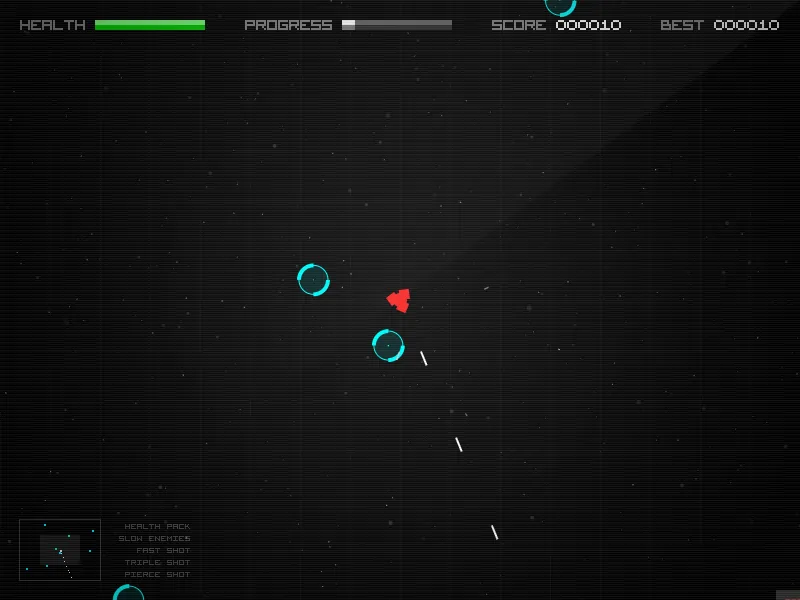
Radius Raid was built by Jack Rugile for the js13kGames competition of 2013, where the whole game had to fit in 13 kilobytes. You move with WASD or the arrow keys, aim with the mouse and hold the left button to fire. The arena is much larger than the screen, and a radar in the corner shows what is coming from outside the view. There are thirteen kinds of enemy: some split, some circle you, some are nearly invisible. Press F to switch autofire on or off. See the browser games and js13k guide for more small games made under that kind of limit.
Nibiruman:2080
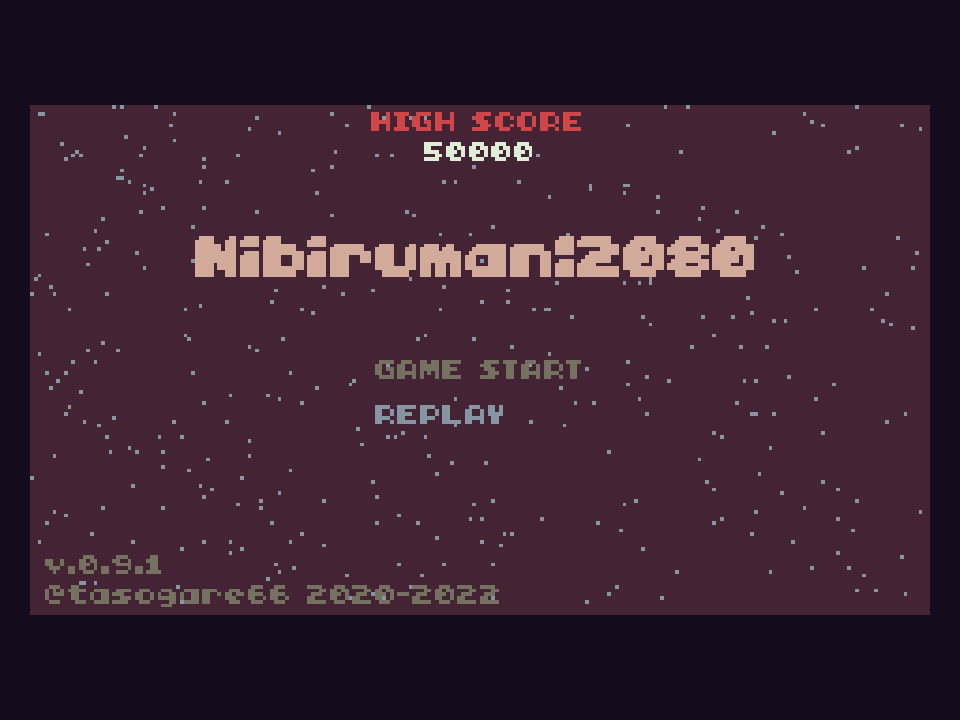
Nibiruman:2080 is a TIC-80 game by tasogare66, played with keyboard and mouse. The arena is round, robots pour in from every side, and bosses bring bullet patterns of their own. Stray humans wander the field, and touching one rescues it for 1,000 points and upgrades your gun to a three-way and then a five-way spread for about half a minute. The right mouse button dashes toward the cursor, and you cannot be hurt while dashing. It needs a mouse, so it is not for phones.
Fixed screen, arcade style
Andromeda Invaders
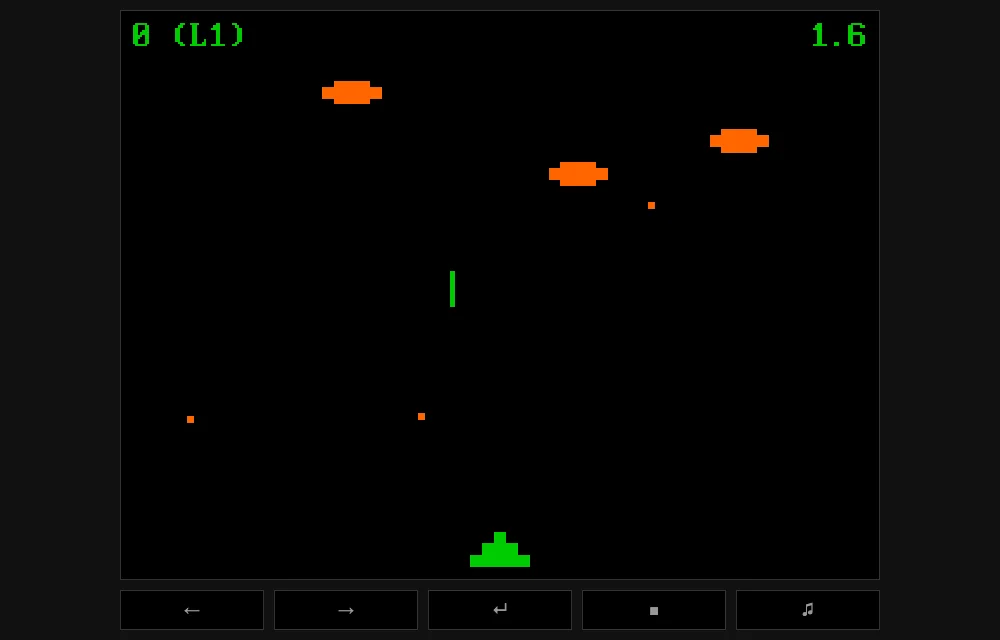
Andromeda Invaders by Susam Pal is a fixed shooter in plain JavaScript. Your laser fires on its own, so you only choose where to stand. Orange ships hover over your planet and drop boulders, and both sides have three grades of health shown by colour. The lowest ship dives at you if it ever reaches your row. Shoot the boulders too: one that hits you costs a grade of health.
A first-person detour
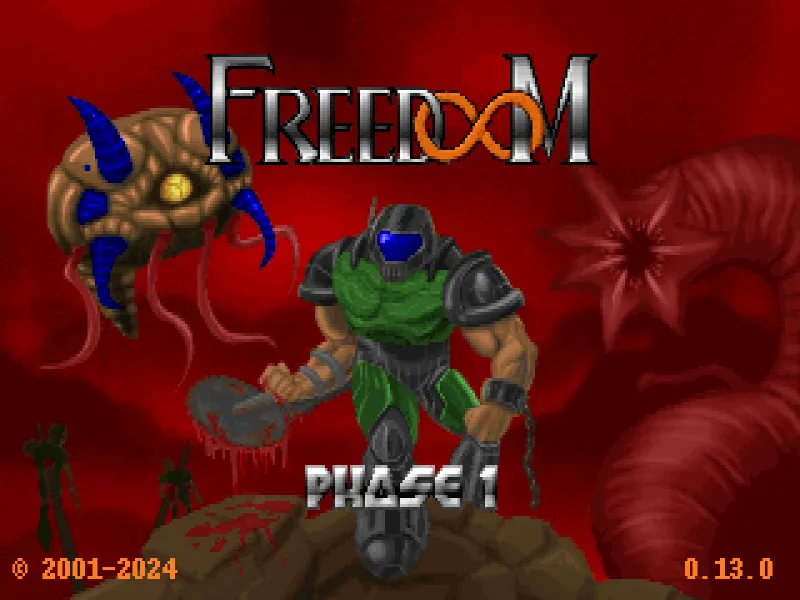
Freedoom is a complete free first-person shooter made by volunteers since 2001, with Phase 1 (four episodes of nine levels) and Phase 2 (one 32-level campaign). The site runs it on Chocolate Doom. Arrow keys move and turn, Ctrl fires, Space opens doors and Shift runs. If you play on a Mac, use the mouse to fire when Ctrl and the arrow keys trigger a desktop switch.
Where to start
- You want a gentle first shmup. Play Chromium B.S.U. on one of the easier skill levels, or Powermanga. Both are about picking power-ups, not memorising bullets.
- You want to learn bullet hell. Start with DT Danmaku 2, then go to Bullet Hell for the bomb and the slow-time meter. When you are ready for the one-pixel hitbox, Tux Planet 2 and its save states are made for practising.
- You only have a minute. ARDUBULLETs is a one-minute battle.
- You want to aim with a mouse. Radius Raid is the classic twin-stick example. Nibiruman:2080 adds a dash.
- You like scoring systems. Parallaxia lets you pick between chain, close and graze play.
- You have a console in mind. GunTneR runs on the NES, and you can find more on the NES platform page.
For more of the same, browse the shooter category.