Portugues
Puzzle games on FredyGames: a guide by type
Puzzle is the biggest shelf on FredyGames, with well over two hundred games, and it is also the one where it is hardest to know what to pick. A puzzle can be a warehouse floor, a grid of numbers, a pile of boxes waiting for a ball, or a handful of letters. They have little in common except that you win by thinking, not by reflexes. This guide sorts the shelf into types, explains what each type asks of you and points to the games we would start with. They run on very different machines: plain browser games, homebrew for real consoles, and tiny fantasy consoles. The full list is always on the puzzle genre page.
Simon Tatham's puzzles are left out on purpose: they have their own guide, Simon Tatham's Puzzles.
Pushing crates, and the games that bend the rule
The warehouse puzzle is the oldest family on the shelf. Sokoban ("warehouse keeper" in Japanese) was designed by Hiroyuki Imabayashi in the early 1980s, and its rules fit in one line: you walk around a room and push crates onto marked squares. You can push but never pull, and only one crate at a time. That single restriction is where all the difficulty comes from, because a crate pushed into a corner is stuck for good.
The plain version
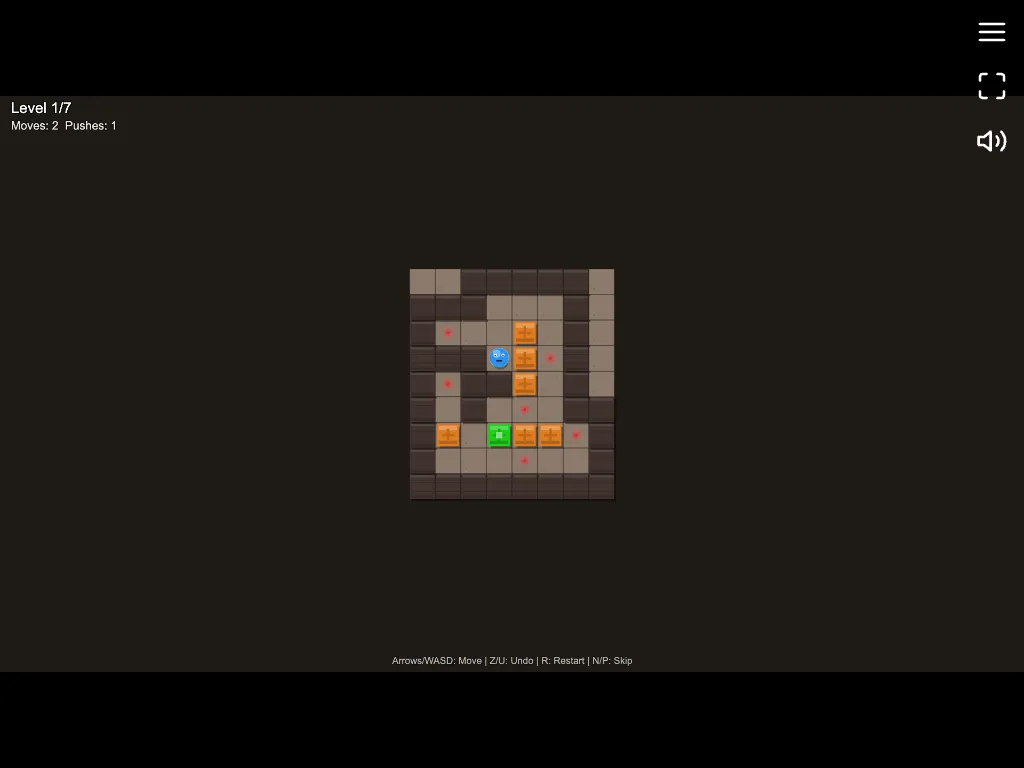
Crate Pusher is the cleanest place to learn it. It has seven levels, unlimited undo (Z) and a restart key (R), and it counts your moves and pushes. Its page gives the one tip that matters: before you push, check that you can still reach the other side of the crate.
If you like the style, Ticoban has twenty small rooms where you push boulders into holes, and keeps your best moves and time for each room. Split Push runs two boards side by side and lets you walk between them. It was made for a jam whose theme was "Balance": you and every box have a weight, and the heavier board sinks, so the rows stop lining up after each crossing.
PuzzleScript and the one-rule remix
A lot of the best box-pushing variations on FredyGames come from PuzzleScript, a small engine for tile puzzles written by Stephen Lavelle (increpare). A PuzzleScript game is a short text file of rules, which makes it a good tool for taking the Sokoban idea and changing a single thing. All of these remember your level in the browser, and all share the same keys: arrows to move, Z to undo, R to restart, X to confirm.
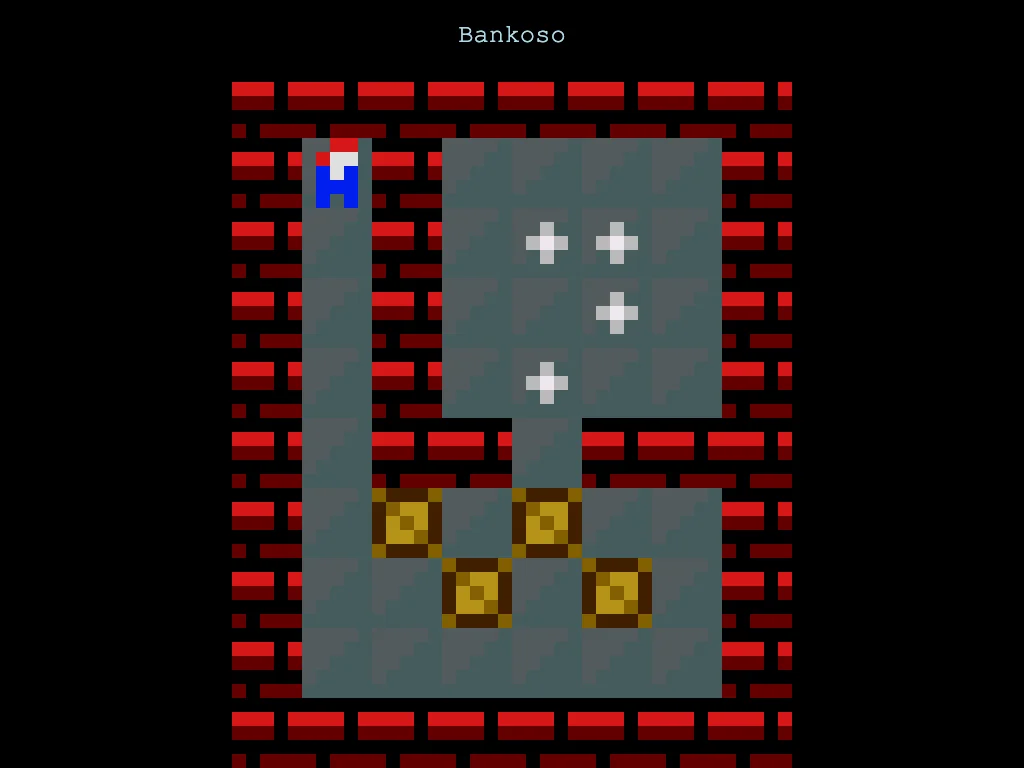
- Bankoso reverses the rule. You cannot push anything: a crate directly behind you follows when you step away, so crates are always pulled to their spot. Corners stop being a mistake and become a tool, and later levels add holes you can cross only once. Eight levels.
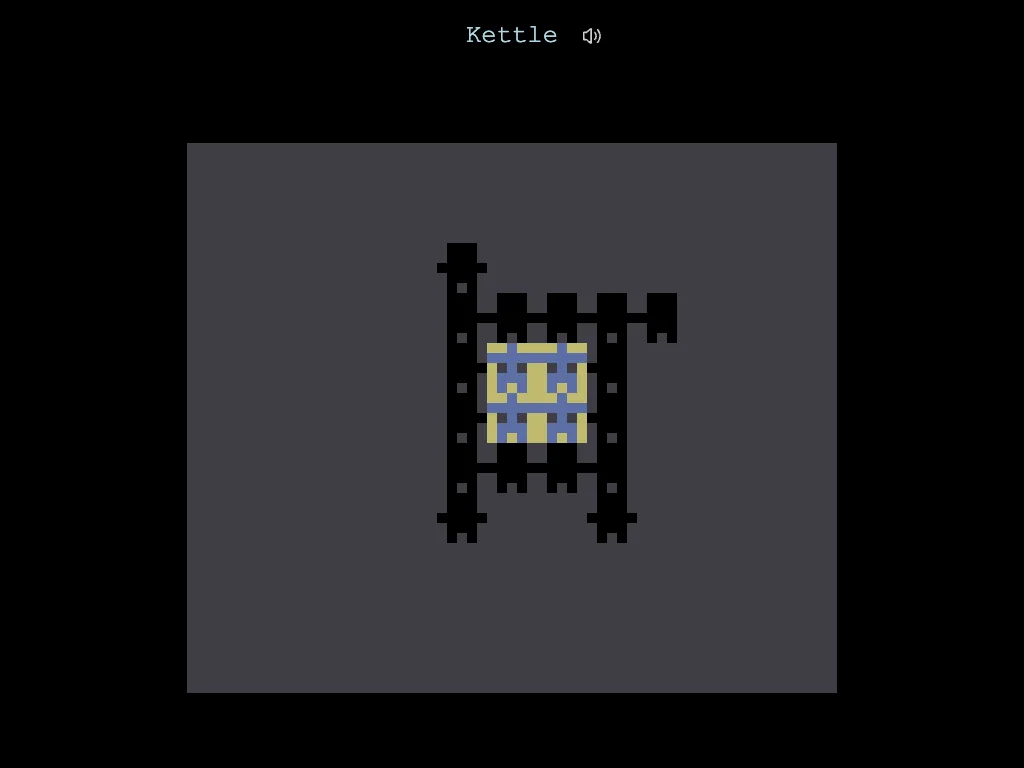
- Kettle gives you a whole squad of police officers, each able to walk in one direction only. One key press moves every officer who can go that way, and anyone in their path gets shoved. Eleven levels, and the puzzle is working out which of your pieces will move on each press.
- Constellation Z is an abstract one. Stepping on a white teleporter turns you into a copy on every other teleporter, and all the copies move together. The goal is to cover every blue target at once.
- Octat is about lit tiles. You can only step on lit squares, and every landing flips the four tiles around you, so each move rewrites the map.
- Orpheus is about looking. You slide across a temple floor, open eye tiles by looking at them, and may never look at the same tile twice.
Bigger worlds with the same idea
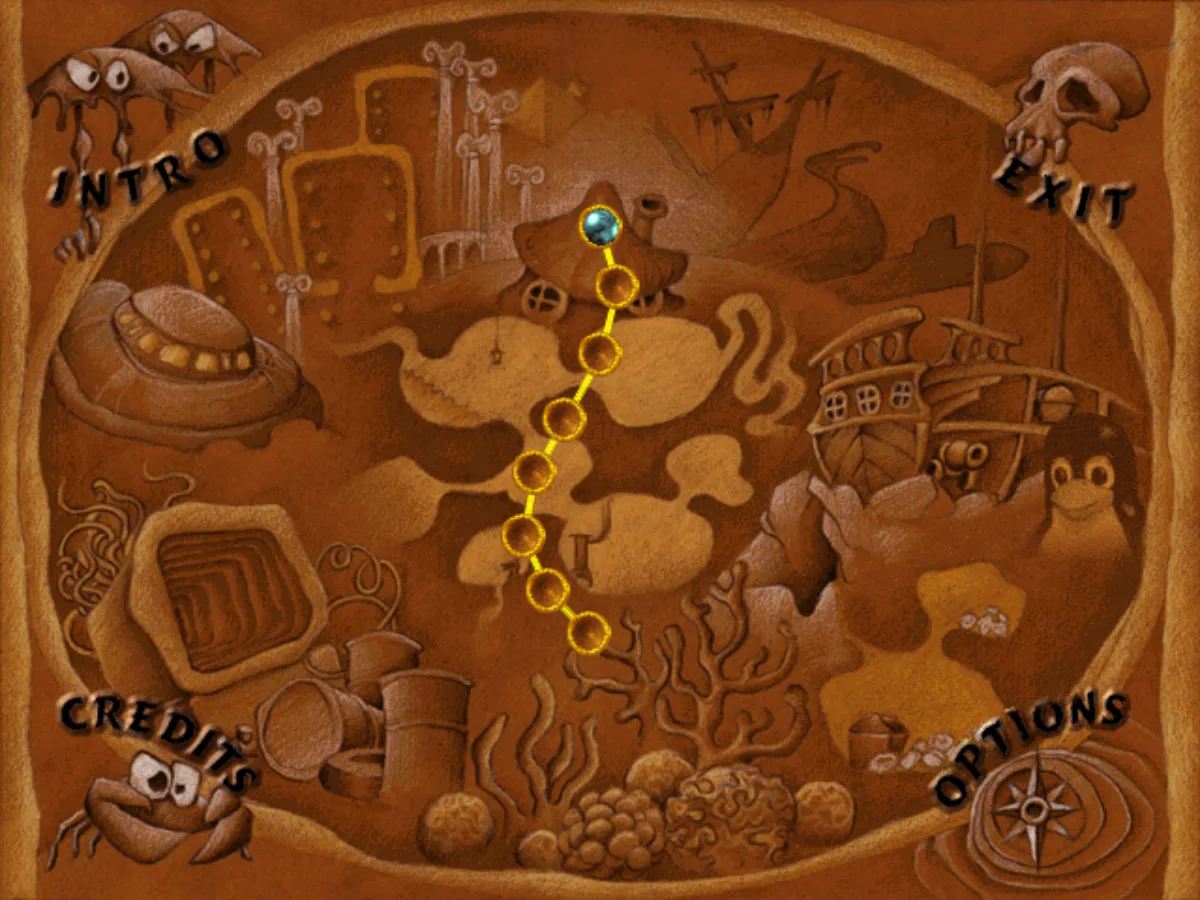
Some games keep the pushing and add a cast of characters. Fish Fillets NG gives you two fish, a small one and a big one, in sunken rooms full of objects that stack and fall. The small fish fits through gaps; the big one can move steel. Both are fragile, and the room has to be solved so that both get out. It has seventy-four rooms, undo and redo, and subtitles in many languages. Berusky hands you up to five ladybugs, five keys per level, and boxes, explosives, stones and coloured doors to deal with, across 120 levels. Adventures of Robbo, a DOS classic from 1994, mixes crates, keys and bombs into a puzzle-action game over sixty planets.
On a console
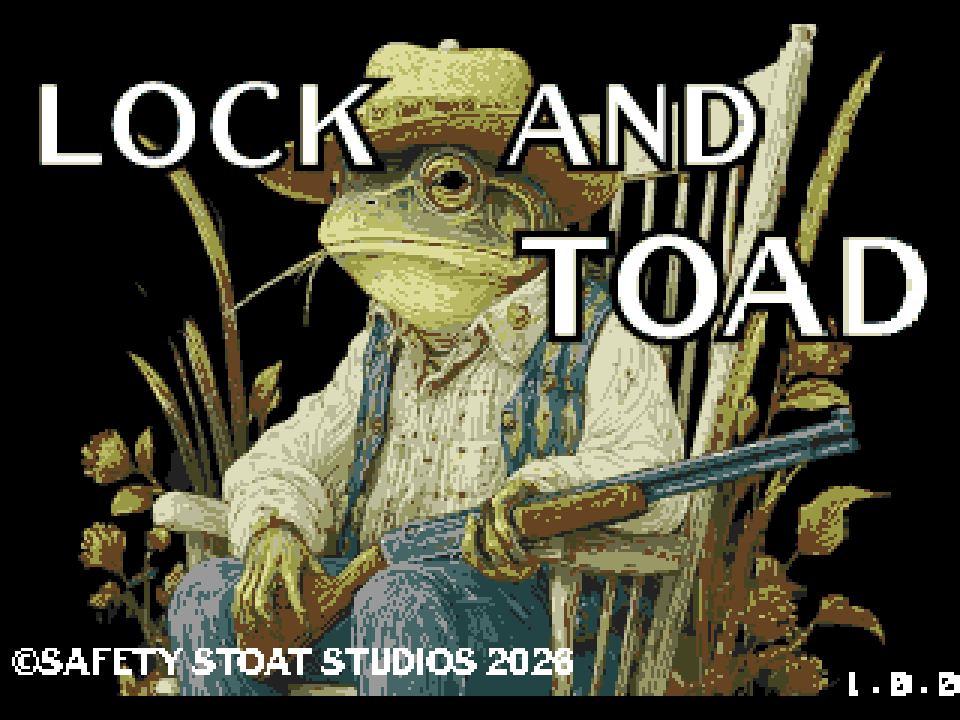
Lock and Toad is a free homebrew for the Mega Drive that starts as a Sokoban game and then shoots back: drones, turrets and sprinklers fill the room with bullets while you push blocks onto targets. Bullets chip away at blocks, so a block can be a shield or something you accidentally destroy. If you want to know what homebrew means and how we check it, read what is homebrew.
Logic and deduction
In this family there is exactly one right answer and you can find it without guessing. If you have to guess, you missed a deduction. That promise is the appeal.
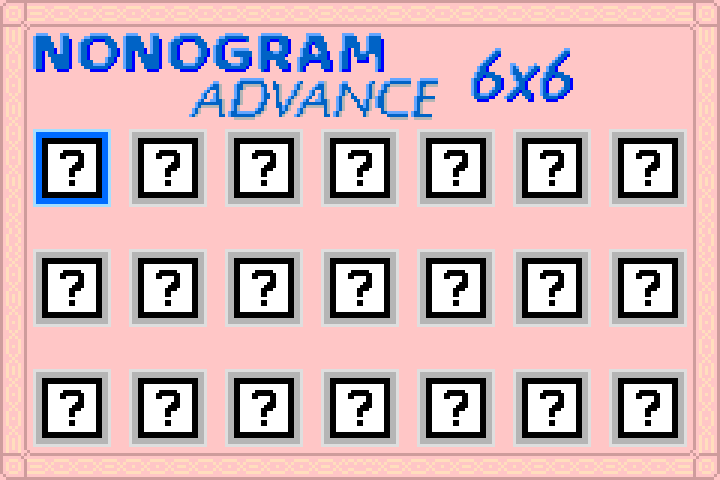
Picture grids. Nonogram Advance for the Game Boy Advance has 108 puzzles from 6 by 6 up to 22 by 12. The numbers beside each row and column say how many filled squares the line holds, in groups and in order. Work out which squares must be filled and which must stay empty and a pixel picture appears. The author checked the puzzles with a solver and redrew those with more than one answer, so logic alone should get you there. Hold a button and move to paint a line. ScriptCross is a tiny PuzzleScript version with four pictures if you want to try the idea first.
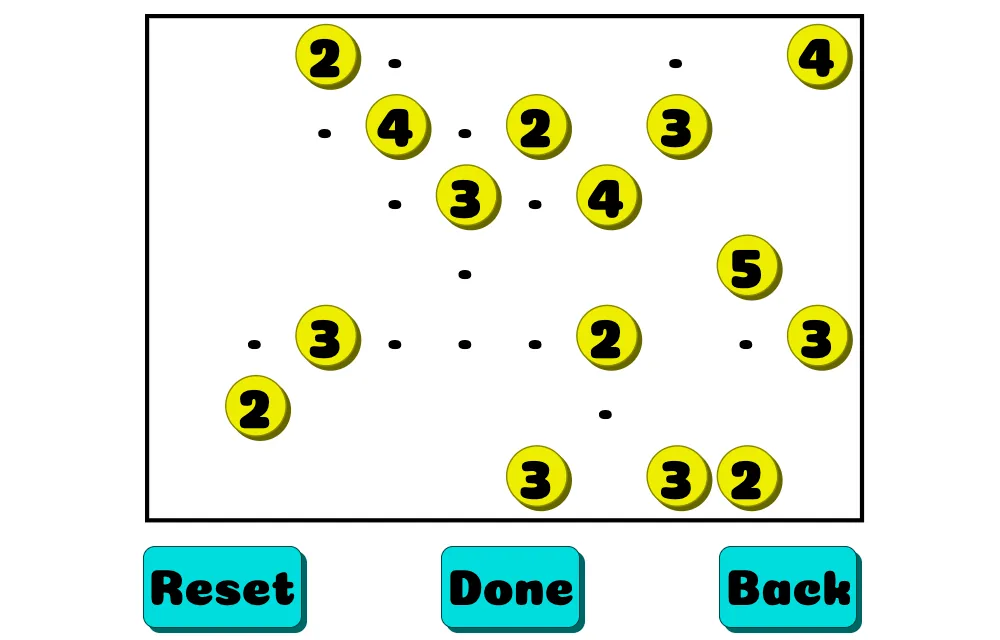
Lines and numbers. Linjat gives you numbers in discs and loose dots. Every number must grow a straight line exactly as long as the number, counting its own square, every dot must end under some line, and lines may not cross. There is a four-board tutorial, then Easy, Medium, Hard and Expert with a hundred puzzles each.
Whole shelves of pencil puzzles. Kazu Number Puzzles is a collection: Sudoku and its variants (Jigsaw, Diagonal, Killer), Futoshiki, Skyscrapers, and further pages for Hitori, Nurikabe, Akari, Masyu, Yajilin, Heyawake and more. It has a hint button that tells you which cell to look at and why, which makes it a decent teacher for rules you do not know yet. If you just want classic Sudoku, there is also Sudoku.
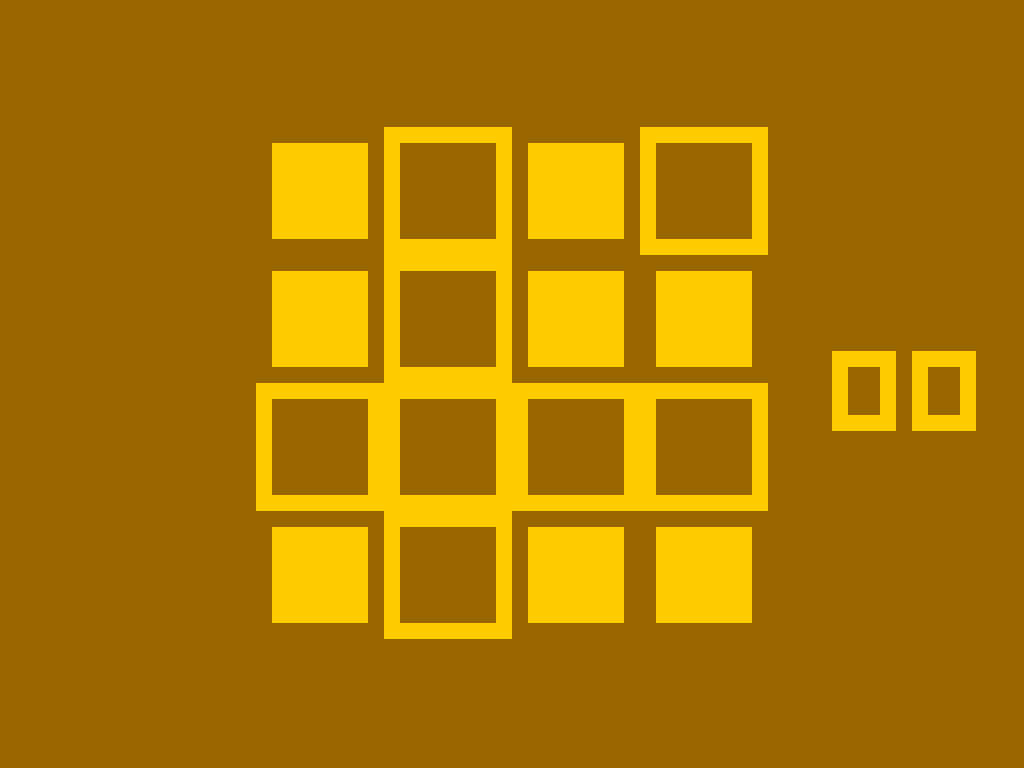
Switches. Mini Lights Out is a 4 by 4 grid for CHIP-8. Pressing a light flips it and its four neighbours, and the grid wraps at the edges. The twist: you may only press lights that are on, and a hundred moves ends the round. Parity is even smaller, a 3 by 3 grid where you move a selector that adds one to every square it lands on, until all nine numbers match.
Mines and pipes. Minesweeper MD brings the mine-hunting classic to the Mega Drive with times for each difficulty. For pipes, Suido Pipe Puzzles lets you rotate pieces until the pump reaches every drain, and Waternet does the same on the Arduboy, with modes where you also slide rows and columns.
Programming as a puzzle. Cube Composer has you chain functions such as map and reject to reshape rows of coloured cubes, and Matcha9000 on WASM-4 makes you write a robot's program one op code at a time.
Physics and mechanisms
Here the puzzle is a thing in motion, and you are guessing how it will behave.
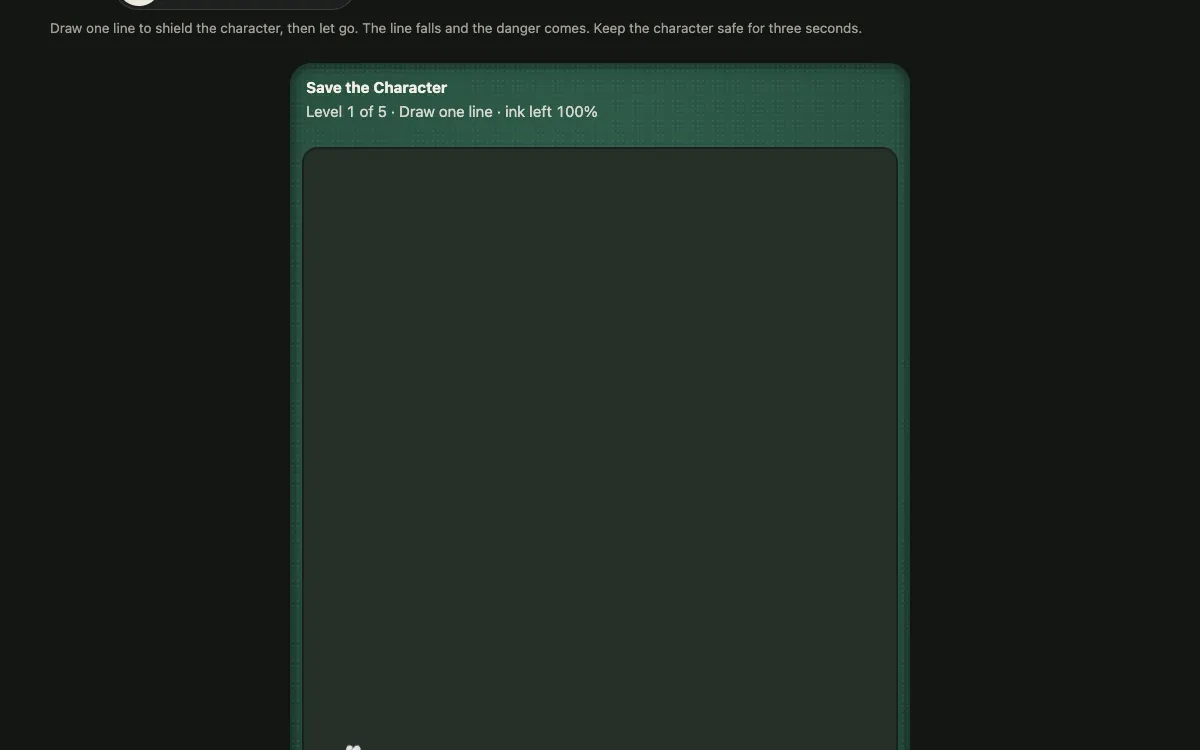
- Karakuri Physics Puzzles is eight mini-games in one page with five levels each. You draw a line to shield a face from falling hazards, pull pins in the right order, unscrew plates, cut ropes, sort colours between tubes and more. The physics gives the same result in every browser, so a solution that works once works every time.
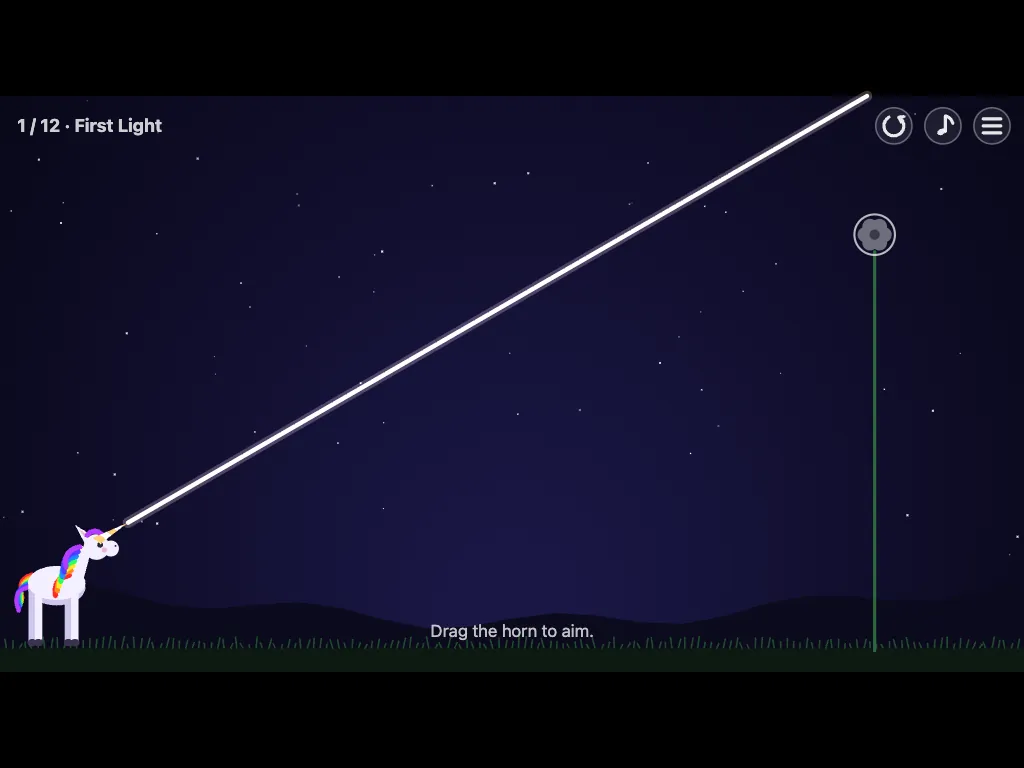
- Newton's Unicorn is an optics puzzle. The horn shoots white light, and you bend and split it with prisms, mirrors and raindrops to give grey flowers their colour. Each flower needs exactly its colour, and white is not enough. It was made for the js13kGames competition, where a game must fit in 13 KB; our guide tells that story.
- LMarbles (an Atomix-style game) has marbles that roll until they hit something, and you build the target pattern from them. A marble that must end up in the middle of an open space needs something to stop it, so you have to build your own stop.
- Box Smasher is a slingshot game: throw balls at a stack of boxes, and clear the screen with as few as you can across 24 levels.
- Me and My Shadow is a puzzle platformer. You record a run of moves and your shadow repeats it, so it can stand on a switch for you or carry you across a gap.
Words
Word puzzles ask for vocabulary, but also for a kind of logic: which words still fit the clues?
- Word Code gives you six tries to find a secret five-letter word. Green tiles are in the right place, yellow ones are in the word but elsewhere, dark ones are not in it. It also lets you type a secret word for a friend.
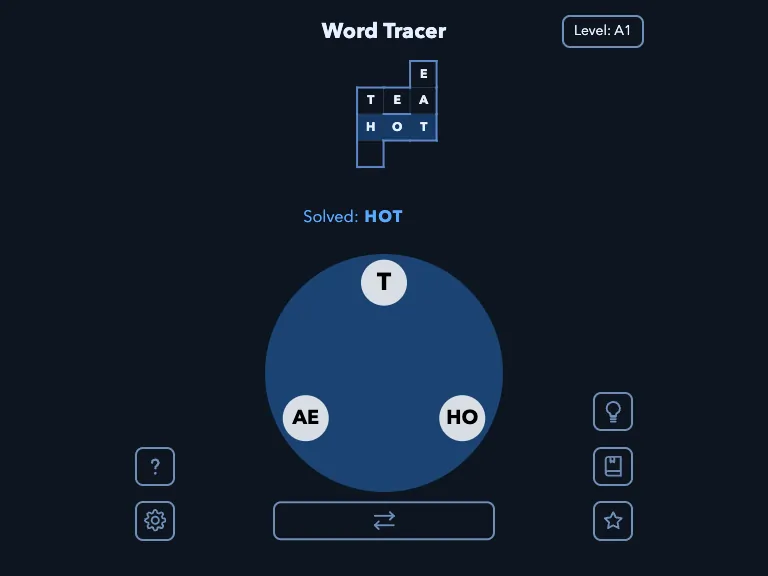
- Word Tracer is a crossword you fill by swiping across a wheel. The pieces are not single letters but tokens like T, OH and EA, so EAT is built from EA and T. It has over two thousand levels in dozens of packs and a built-in dictionary.
- Crossword Letters hands you about six letters and an empty crossword that fills as you find words.
- Kumimoji Word Tiles is about building one connected crossword out of every tile in a bag, in English or kana, against a clock.
- Let's Part, E is a PuzzleScript game in which you are the letter E, pushing other letters into the words listed beside the board.
Matching and merging tiles
These games are easy to learn and hard to put down, and almost all of them can be played in a few minutes.
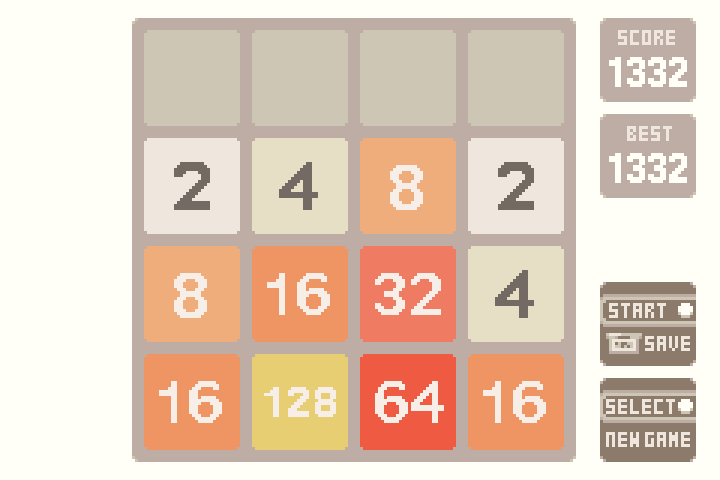
2048. Slide every tile in one direction; two equal numbers merge into their sum. Gabriele Cirulli's 2014 version made it famous, and on FredyGames you have two homebrew ports. 2048 Advance for the Game Boy Advance saves your board with Start and lets you carry on past 2048 to 4096 and 8192. 2048 for the fantasy console WASM-4 has ten colour palettes, and there is also 2048 2600 for the Atari 2600.
Match three and groups. Gem Swap and Monsterz are the familiar swap-two-neighbours kind. SameGame for the Arduboy is the older relative: remove groups of matching neighbours, let the rest fall, and try to clear the whole board for a bonus.
Odd rules. Hextris bends falling blocks around a hexagon; you rotate it so three or more of a colour meet. Biniax-2 lets you take a pair only if one half matches your element, and then you become the other half. CASCADE7 for the Game Boy Advance drops numbered discs into a seven by seven well, and a disc clears when its number equals the length of its row or column.
Where to start
- Never played a puzzle game? Crate Pusher. Undo is unlimited, so nothing is lost.
- Like deduction? Linjat in the browser, or Nonogram Advance if you want a handheld feel. Then Kazu for variety. Our Simon Tatham guide is the next step.
- Want a surprise in five minutes? One of the PuzzleScript games: Bankoso or Kettle.
- Want something calmer and longer? Fish Fillets NG.
- Prefer consoles? Lock and Toad on Mega Drive, Mini Lights Out on CHIP-8. Our guides to fantasy consoles and playing retro games in your browser cover how those run.
- Words? Word Code for a quick guess, Word Tracer for a long session.