Portugues
Free platform games to play in your browser
Platformers are the biggest family on FredyGames: more than a hundred games are tagged with the genre, spread across almost every system we host. The word covers a lot of ground. A game where you stomp on mushrooms, a game where you die forty times on one screen and a game where you wander a map for hours are all platformers. This guide sorts them by style, so you can pick the kind of jumping you are in the mood for, and shows how differently the same idea plays on a Game Boy, an Arduboy and a web page. Everything here runs in your browser, with nothing to install. The full list is always on the platformer genre page.
What counts as a platformer
The core is simple. You control a character who walks and jumps, the level is built from ledges, gaps and obstacles, and the fun is in judging distances. The jump is the whole vocabulary of the genre: how high, how far, how much control you keep in the air. Developers spend months tuning it, which is why a game can feel wonderful or awful before you have seen a single enemy.
Around that core, games split in a few directions. Some want you to move fast and keep going. Some want you to fail and retry until your hands know the route. Some turn the map into a place to explore. Some use the jump as one tool in a puzzle. We use those four groups below.
Classic run-and-jump
This is the style most people picture: side-scrolling levels, enemies to stomp or shoot, coins or items to grab, a boss at the end.
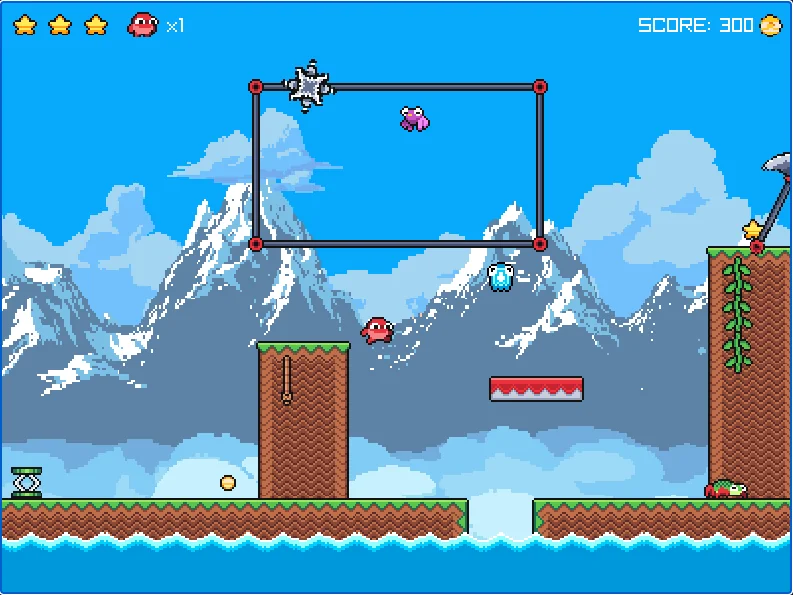
Super Mango is a recent example, written in C by Jonathan Peris with a pixel-art pack by JuhoSprite. You run, jump (let go early for a short hop), climb vines and ladders, and cross grass towers, crumbling bridges and bouncepads. Later stages move into lava, with saws, flames and swinging axes. Stars refill your health, checkpoints are generous, and the game remembers your best time and shows a ghost of your best run. If you want a modern game that behaves like an old one, begin here.
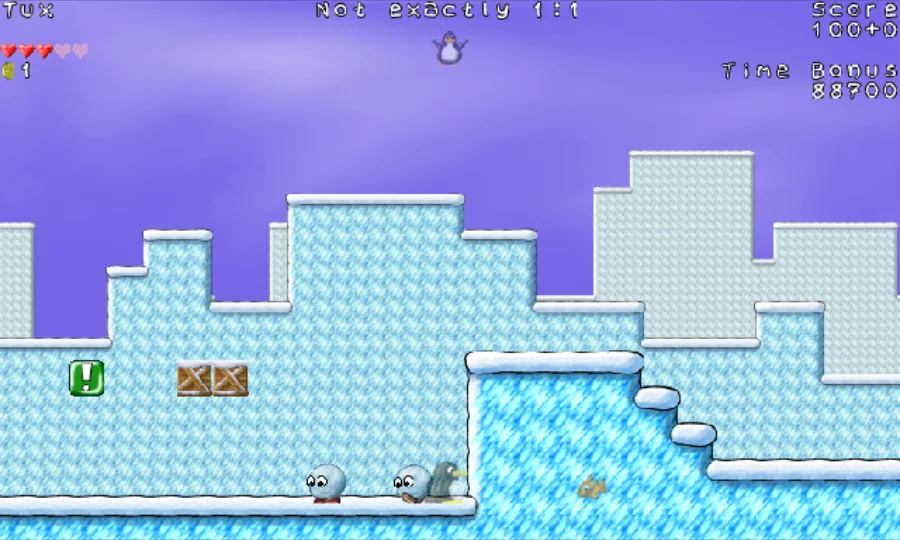
ReTux is a free-software tribute to the genre's standard formula. Tux the penguin crosses 41 levels in five worlds, with a world map between them, hearts of health instead of one-hit deaths, and a boss at the end of each world. Hold X to pick things up and throw them. It is a larger download than most (it runs Python and pygame in the page, which the page explains), but it keeps your progress in ten save slots. The same author made Hexoshi, further down.
Seahorse Adventures is the odd one: your weapon is a stream of bubbles. Shoot an enemy enough and it floats up trapped in a bubble, and you can ride it to a platform you could not jump to. It was made in a week by a team of friends for a Python game contest in 2007.
On older machines the same formula is harder, and in places meaner:
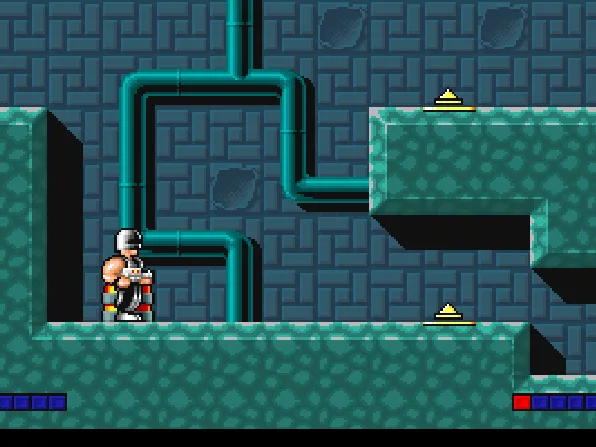
- Electro Man is a DOS game from 1994 set inside a research complex. You need to find three data disks to wake the teleporter, and most hazards kill on contact. Its own page gives the best advice: stand still for a few seconds and watch the traps, because almost all of them run on a timer.
- The Sword of Ianna is a flip-screen sword fighter for the MSX. Every direction of your sword is a different stroke, and each enemy has its own pattern and its own energy bar.
- Castle of Viana is a DOS game drawn in the four CGA colours, made for a 2017 jam. You climb a floating castle room by room with a sword and a bow.
- Stallar is a short NES platformer from a Ludum Dare jam. The level has a joke in it that we will not spoil.
- Alex vs Bus: The Race for the Mega Drive turns the daily bus chase into a runner: holes, crates and parked cars between you and the stop.
If you want the story of how these homebrew games are made on old consoles, our guides to NES homebrew, Sega homebrew and Game Boy homebrew cover it, so we will not repeat it here.
Precision and difficulty
Some platformers are designed around failure. Levels are short, restarts are instant, and you win by memorising and then executing. These games respect your time by never making you wait to try again.
Tobu Tobu Girl Deluxe for the Game Boy is a vertical climb with a three-move system. Landing on an enemy bounces you up. You have three dashes, which come back each time you land on an enemy. Flapping gives a steady boost while your energy lasts. Dashing down into an enemy knocks it away and refills part of that energy. The game's own advice is to dash towards the next enemy, never into empty sky, and that is the whole game in one sentence.
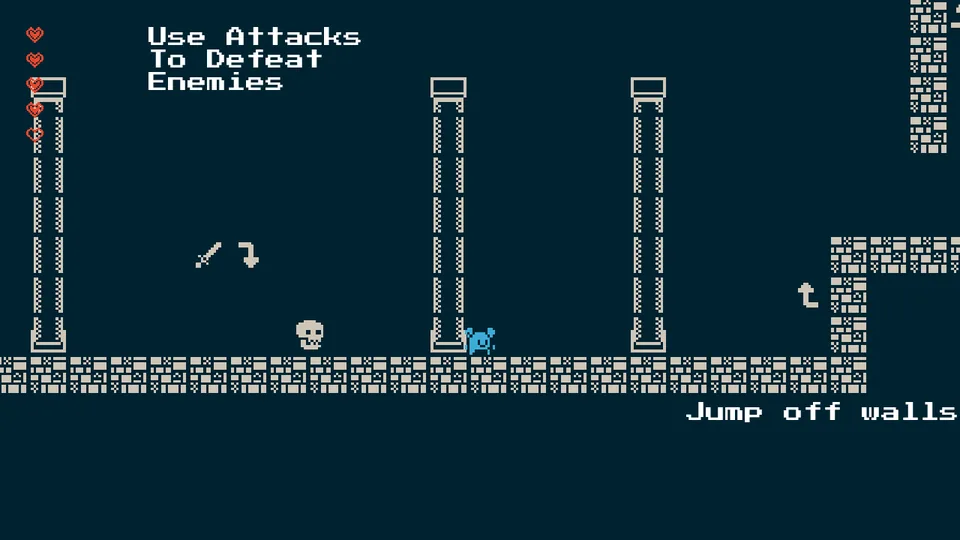
Jump & Sword & Dash is a small one-bit-style game made in about two weeks. It teaches its three moves (jump, sword, dash) in the first rooms, using words painted on the walls, then combines them: wall-jump up a shaft, dash over a trap, cut down the skull at the top. It runs in the page.
Geometry Jump strips the genre to one button. The cube never stops sliding; you only decide when to jump. The levels repeat until you know them, and the page's advice is to jump late, so the arc clears the spike.
Super NeatBoy for CHIP-8 fits eight leaves and fourteen connected screens into a tiny virtual machine from the 1970s. Anything in the hero's hot pink is deadly. If you touch it, you restart that screen, and at the end the game shows your time and how many times you had to start a screen over. It was written as an example of how to build a platformer for that machine, and it works as a speedrun.
Tux Planet Speedrun Any% gives you the tools of a speedrunner inside the game: savestates on S and A, slow motion on Left Shift, and a short teleport. Ten levels, a clock that never stops, and level design that the game itself calls terrible on purpose. Save right before the hard part and retry that part until it is automatic.
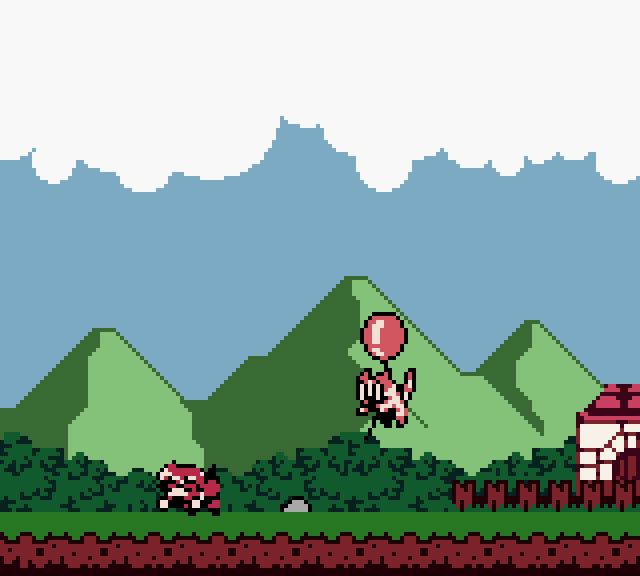
Mystic Balloon on the Arduboy is more forgiving but still unforgiving in the right places. Your balloons are your jump and your life: press jump twice to float, lose a balloon whenever something touches you, and hold the other button to inhale creatures and get balloons back. There are 39 levels, each a maze several screens tall. The page gives a useful tip: Up and Down move the camera, so look before you leap.
Metroidvanias and exploration
In a metroidvania the world is one connected map. Some doors stay shut and some ledges are too high until you find the ability that opens them. The reward is the moment when you remember a place you could not reach, and realise the new power fixes it. FredyGames has a good number of small ones, which is an advantage: they are short enough to finish.
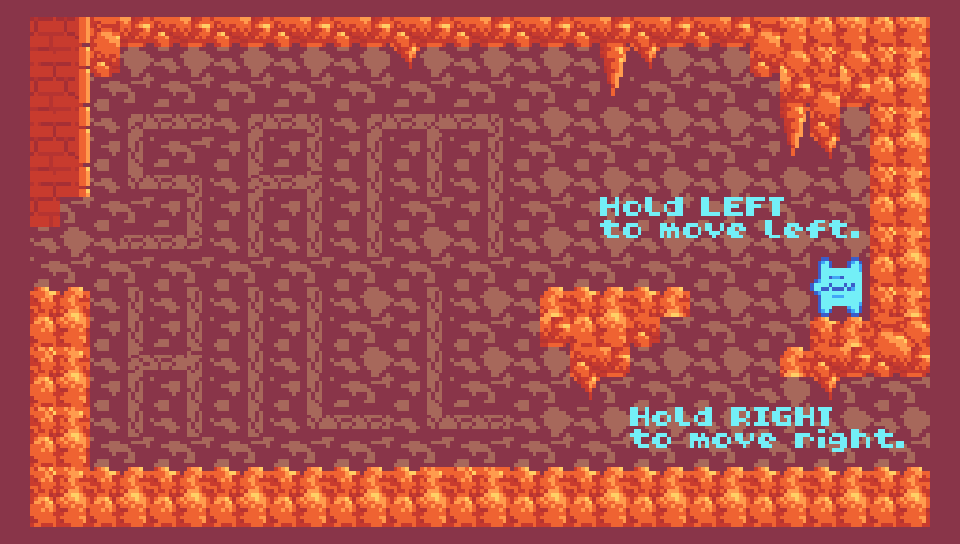
- Sam Hill for TIC-80 is the gentlest way in. It has no enemies, hazards or game over, only three pickups that let you glide, run and fly. It takes a few minutes, and a text reminder appears each time you gain an ability.
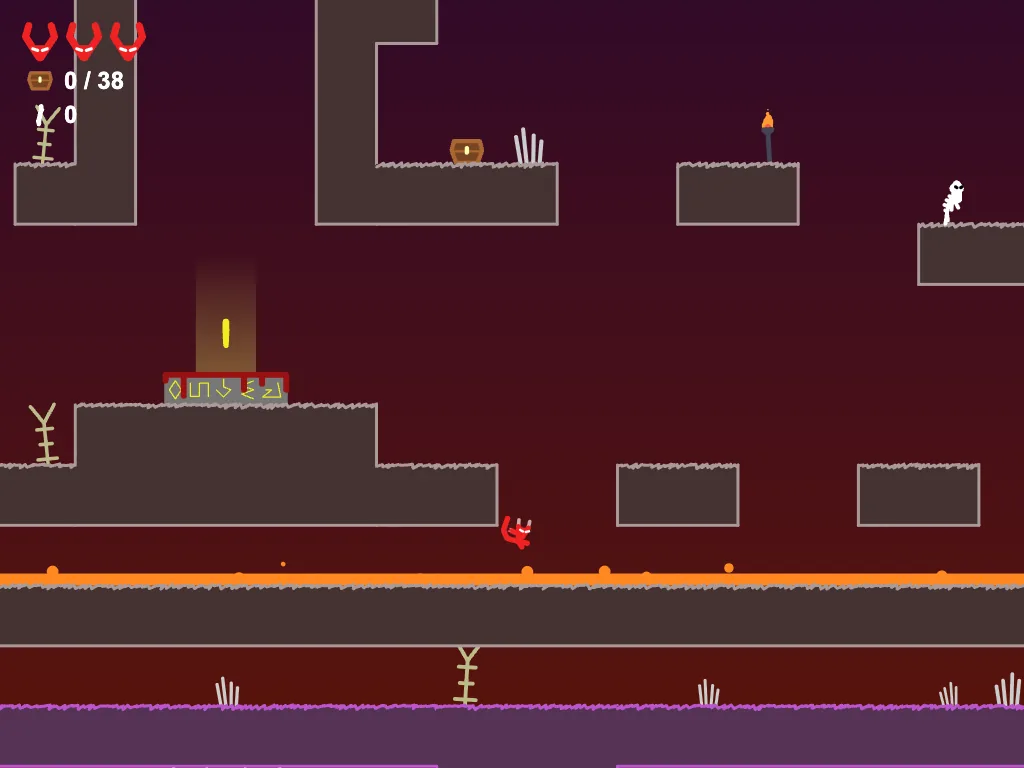
- Infernal Throne is a metroidvania in miniature, made for the js13kGames competition. You are a fallen ruler climbing back out of the underworld. Four abilities (a dash, wall claws, a fireball and wings) open five regions. Hold the map key often: it shows where you are, which makes it easier to find that wall that looked climbable. Our guide to browser games and js13k tells more about the competition.
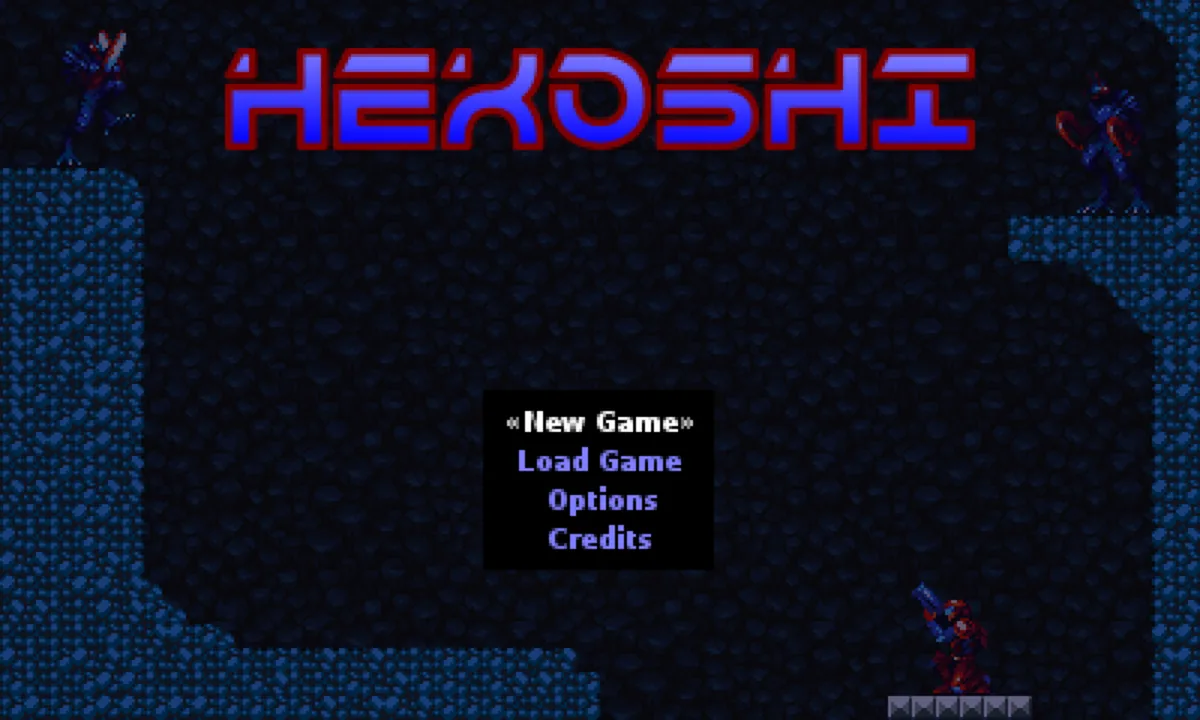
- Hexoshi is a demo of a game that was never finished, but what exists is a small, complete world of 39 rooms with 13 pickups. Upgrades include a wall jump and a ball form that fits through narrow gaps, and warp pads are the save points. The page's tip is the genre's basic habit: a ledge too high or a gap too narrow is a promise that you will be back.
- L'Abbaye des Morts for MSX gives you no weapon at all. You play a Cathar hiding from a crusade in an abandoned church; you can walk, crouch and jump, and you avoid everything. Twelve crosses are hidden among the rooms.
- GORGOION on TIC-80 pairs you with a fairy named Peri, who later learns fire and ice, and many paths only open when you combine the two of you.
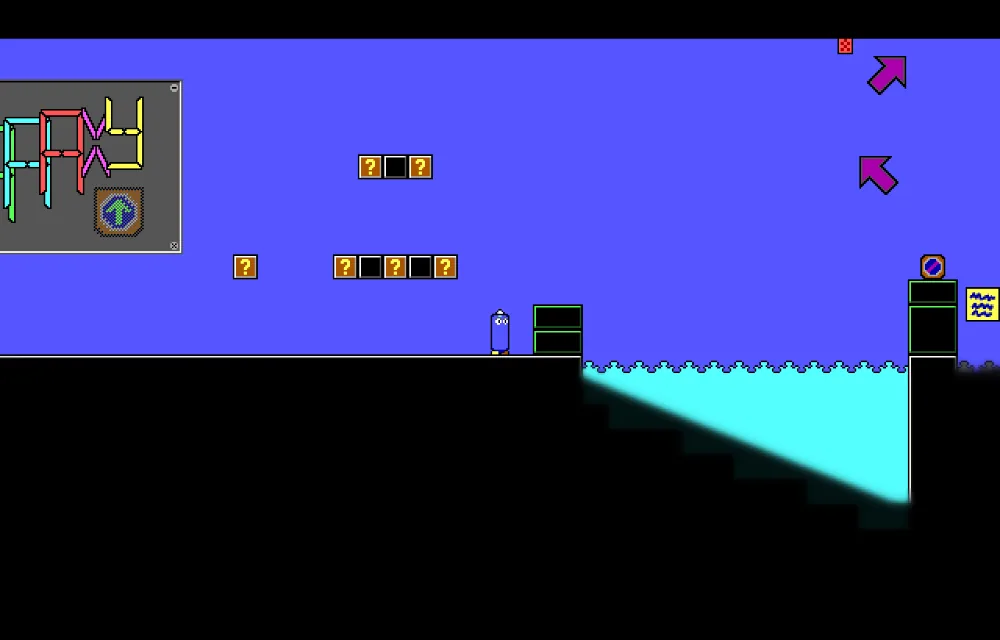
- AAAAXY is the strangest. The rooms do not fit on a flat map: paths loop back and spaces overlap, and the game even sends you through a Klein bottle. Remember landmarks, not directions. It is a big download (about 36 MB) and the page suggests turning off visual effects on a slow computer.
Puzzle platformers
Here the jump is one tool among several, and the question is not "can you reach it" but "how".
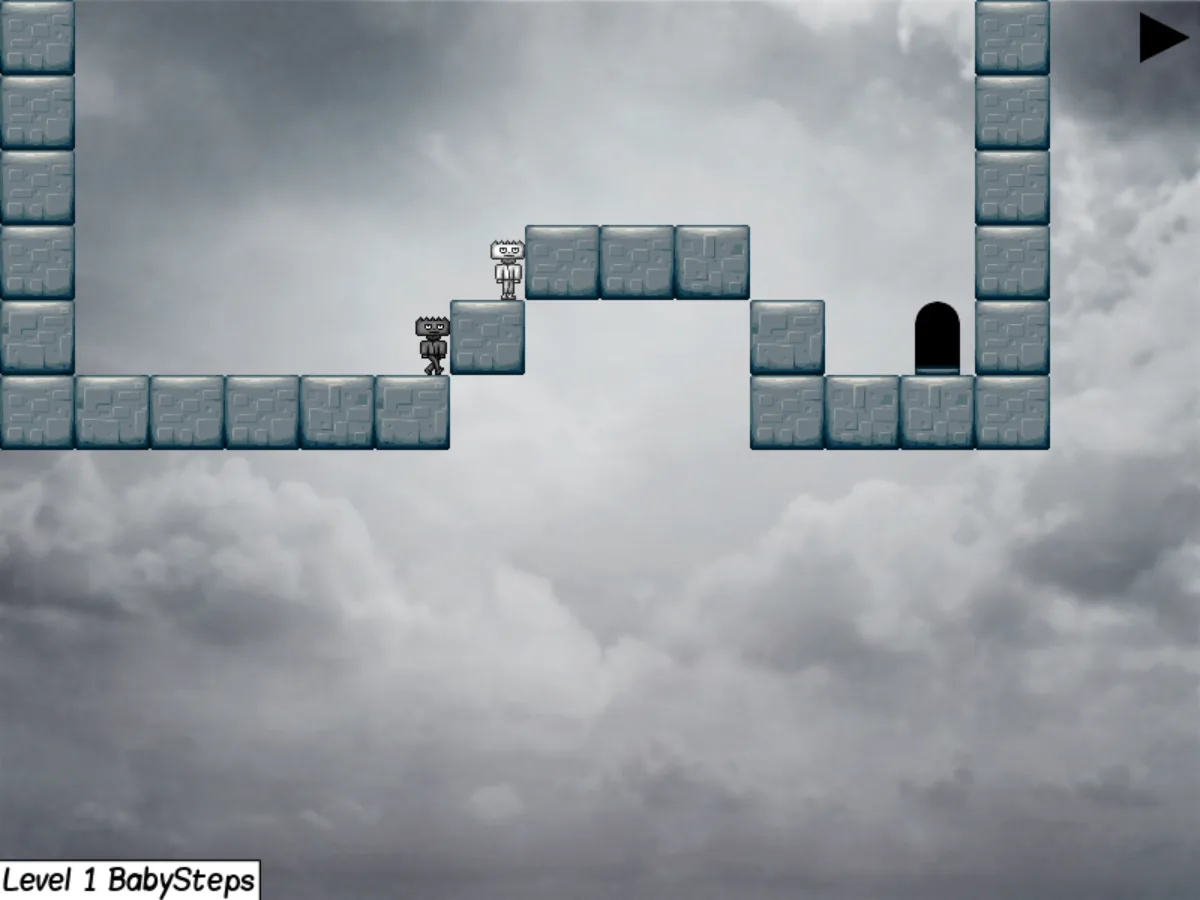
Me and My Shadow gives you a recording. Press Space and the game records your moves; press it again and your shadow replays them from the start while you play on. The shadow can hold a switch for you, or be a step to jump on. Every level has a target time and a target number of recordings, and meeting both earns a gold medal, so solved levels can be replayed with a tidier plan.
The Hat Chooses the Wizard is a Game Boy Advance game with one trick. You throw the hat, and pressing the button again pulls the wizard to it. Across a gap, up to a ledge, along a line of spikes. The pull is also your only attack. It has 12 short levels, each a small puzzle about where to throw.
Little Green Blob (Game Boy) is made of goo that wears away: every step and every hard landing costs some, and what is left at the flag is your score for each of its twenty levels.
Which Way Is Up? has levers that turn the whole level a quarter turn, so a wall becomes the floor. Aqua Journey makes you a drop of water that freezes in the cold and floats away as gas in the heat. Holotz's Castle asks you to pick up every magic object in a room before its exit opens, across ladders, ropes and crumbling floors.
The same genre on different machines
Playing across systems shows what each one is good at.
- On the NES and Game Boy, you get cartridge-style design: short, tight games such as Stallar and Tobu Tobu Girl Deluxe. See the NES and Game Boy pages.
- On the Arduboy, with a 128 by 64 black-and-white screen, a game like Mystic Balloon or Hopper works with a tiny screen. Our guide to tiny open consoles tells the story.
- On fantasy consoles such as TIC-80 and WASM-4, the limits are chosen by choice, which is why they attract game jams. Our fantasy consoles guide has the details.
- On DOS and MSX, you get the 1990s PC look and the 8-bit home computer look. See free classic DOS games.
- In the browser itself, anything goes, from one-button games like Geometry Jump to full metroidvanias. The browser games page collects them.
- On PC, the games compiled to WebAssembly or run through Python, such as Super Mango, ReTux, AAAAXY and Me and My Shadow, are the biggest downloads. See the PC page.
Controls differ by system too, so if something feels off, look at the controls table on the game's page. On most emulated consoles the arrow keys and two letter keys, usually Z and X, stand in for the d-pad and buttons (which letter is which varies), and many of the players save and load the emulator state with F2 and F4. Our guide to playing retro games in your browser explains saves and gamepads.
Where to start
- Never played one? Super Mango, for a modern, forgiving first game, or Sam Hill, which has no enemies at all.
- Want a challenge in short bursts? Tobu Tobu Girl Deluxe, then Jump & Sword & Dash.
- Want to get lost in a map? Infernal Throne for an evening, Hexoshi for a longer one, and AAAAXY if you want something that bends your sense of space.
- Want to think instead of react? Me and My Shadow and The Hat Chooses the Wizard.
- Want the old-computer feel? Electro Man on DOS, or The Sword of Ianna on MSX.
When you have finished these, the platformer page has the rest, and you can filter it by platform.