Portugues
Classic DOS games that are legally free
For many people, DOS is where PC gaming began: a blinking C:\> prompt, a stack of floppy disks and games that squeezed astonishing things out of a beige box. Thousands of those games are still floating around the internet, on sites that offer them as "abandonware". Most of those copies are not legal, and FredyGames does not host them. A smaller number of DOS games are different: their authors or rights holders explicitly allowed anyone to share them, either by releasing them as free software or by publishing freeware terms that permit redistribution. This guide explains the difference, describes the DOS games on FredyGames and what makes each one worth your time, and shows how they run in your browser.
Why abandonware is not legal
"Abandonware" usually describes an old game that nobody sells any more, often from a company that no longer exists. The word suggests that such games have been left for anyone to take. They have not. Copyright lasts for many decades, and it does not end when a game goes out of print, when its publisher closes or when nobody seems to be enforcing it. The rights pass to someone, perhaps a buyer of the company's assets, perhaps the original authors, and only that someone can allow copies.
So when a site offers a 1990s commercial game for download without the rights holder's permission, it is distributing a copy it has no right to distribute, however old the game is and however well-meaning the site. Preservation is important work, and libraries and archives sometimes have legal exceptions for it, but those exceptions do not cover a website giving the game away to everyone.
Shareware, freeware and free software
Three words from the DOS era cause most of the confusion.
- Shareware was a way of selling games. The first episode was free to copy and share, and the rest had to be bought from the author or publisher. Permission to share the first episode never extended to the full game, and if the game is still sold today, sharing even the free episode on a commercial site may be outside the original terms.
- Freeware simply means the game costs nothing. On its own, that says nothing about whether you may pass it on. Some freeware notices from the 1990s let you play the game but forbid distributing it, or forbid distributing it "for profit". A freeware game is only shareable if its terms say so.
- Free software is a matter of licence: the author publishes the game under terms such as the GPL that explicitly grant everyone the right to copy, share and modify it, including commercially, usually on condition that the source code travels with it.
FredyGames accepts a DOS game only when one of two things is true: it is released under a free licence, or its rights holder has published freeware terms that explicitly allow redistribution. Because the site carries advertising, the terms must also permit commercial use. We keep the original licence or readme next to every game, link to where the rights holder published it, and quote the passage that grants permission. Our guide on how we check licences describes the whole process, including the kinds of games we turn down.
The DOS games on FredyGames
The games here reached their free status in different ways, and that history is part of what makes them interesting.
Free software from the start
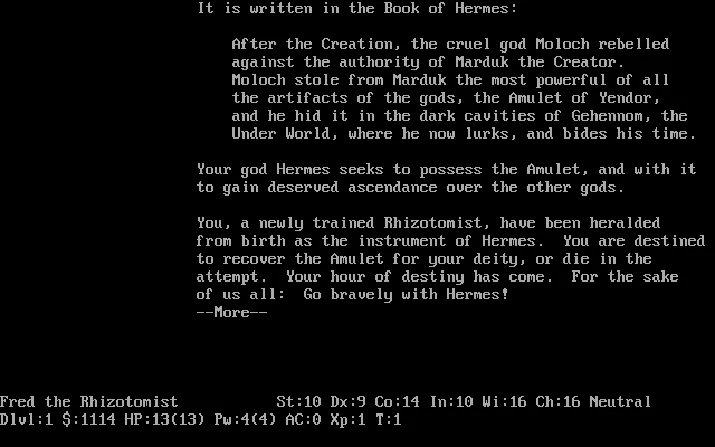
- NetHack (1987) is one of the great roguelikes, released by its DevTeam under its own copyleft licence from the beginning. You descend through a randomly built dungeon in search of the Amulet of Yendor, in a world whose rules interact in endlessly surprising ways. Its variant Slash'EM (2006) adds more roles, monsters and dungeon branches. If you are new to the genre, our guide to roguelikes in your browser has tips for both.
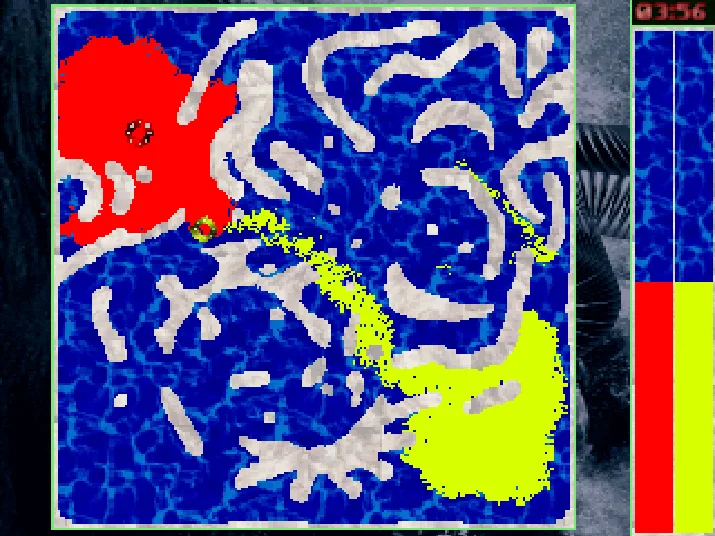
- Liquid War (1998), by Christian Mauduit and Thomas Colcombet, is a strategy game unlike any other. You do not command soldiers: you steer a liquid made of thousands of tiny fighters, each flowing by the shortest path towards your cursor, and armies that meet swallow each other. It is best played against a friend on the same keyboard.
Commercial games their authors set free
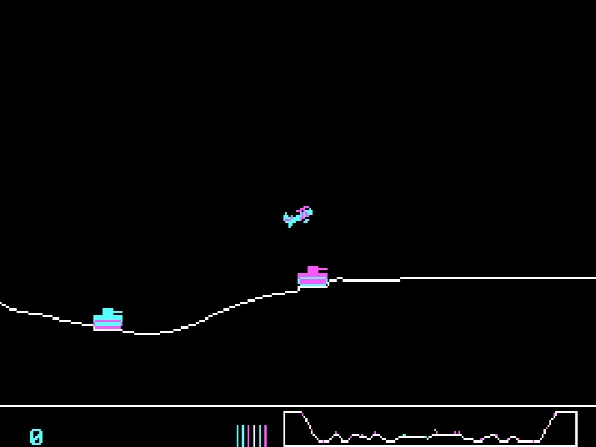
- Sopwith (1984) is one of the oldest action games on the PC: a side-scrolling biplane war in four CGA colours, with birds, oxen and a plane that stalls if you climb too steeply. Its author, David L. Clark, released his own edition under the GPL in 2003. Start on novice, where bullets and bombs are unlimited and the plane does not stall.
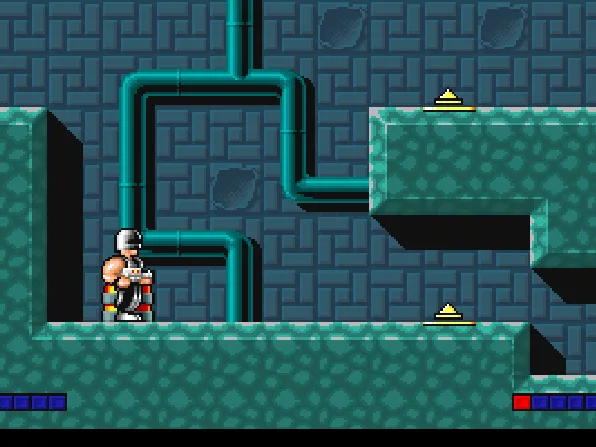
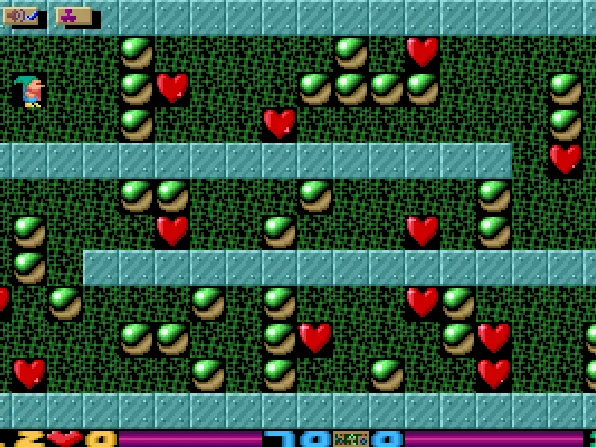
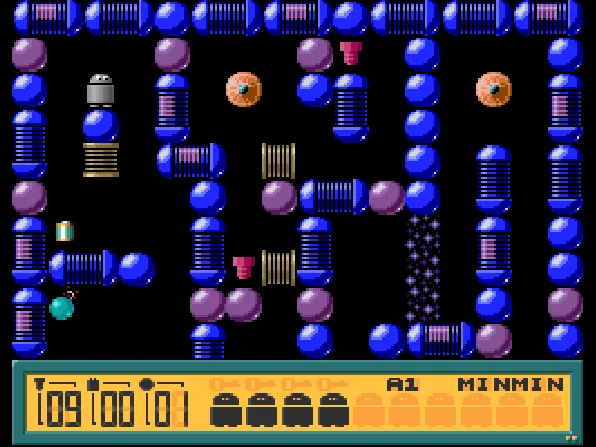
- Electro Man (1994), Heartlight PC (1994) and Adventures of Robbo (1994) come from Xland, a Polish studio. In 2006 their authors re-released them under the Creative Commons Attribution-ShareAlike licence. Electro Man is a tough, stylish platformer through a research complex full of automated defences, with a soundtrack people still remember; Heartlight is a gravity puzzle with seventy levels you can play in any order; Robbo sends a small robot across sixty planets of pushing, shooting and planning.
Freeware with permission to share
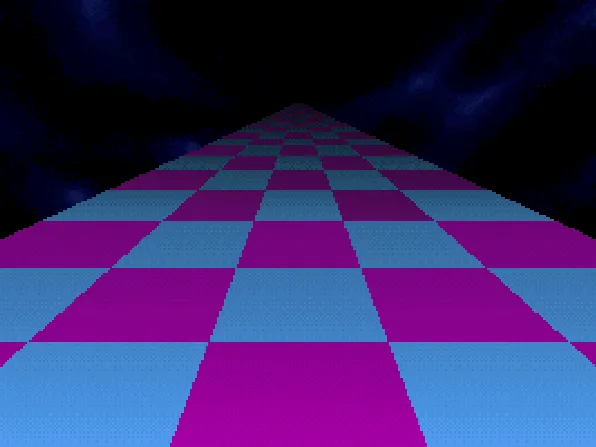
- SkyRoads (1993) by Bluemoon Interactive, from Estonia, is an arcade racer on roads floating in space, with fuel and oxygen running out while you jump the gaps. The studio's freeware terms allow free distribution as long as the files stay together and unchanged. Its holiday edition, SkyRoads Xmas Special, has thirty new roads under the same terms.
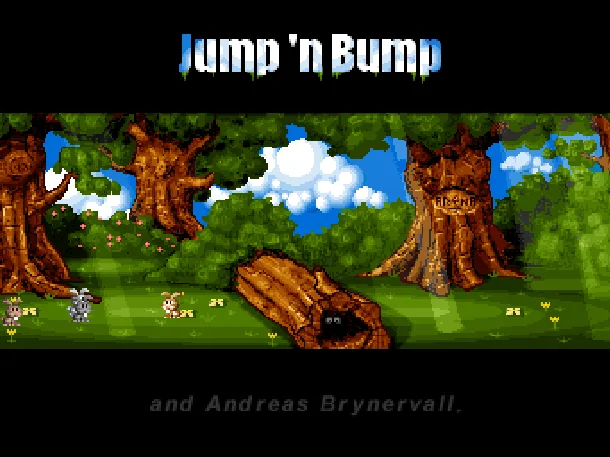
- Jump 'n Bump (1998), by Brainchild Design from Sweden, is a local multiplayer game for rabbits whose only attack is landing on someone's head. Its authors called it "e-mailware" and explicitly allowed anyone to share it. It needs at least two people on one keyboard.
- Lure of the Temptress (1992), the first game by Revolution Software, runs here as the original DOS program. It is a short adventure whose townspeople go about their own routines while you plan. Revolution released it as freeware with a licence that allows free distribution.
New games for an old system
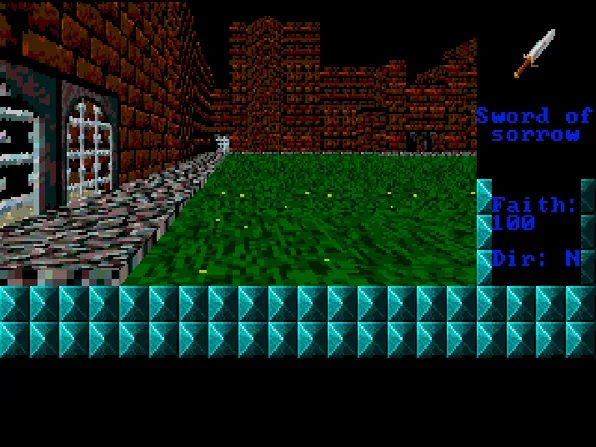
- Dungeons of Noudar 3D (2018), by Daniel Monteiro, is modern homebrew for MS-DOS: a turn-based first-person dungeon crawler built to fit on one floppy disk and run on a 386, released under the BSD licence. It shows that people still write for DOS for the same reasons others write for the NES or the Atari 2600.
Adventures in ScummVM
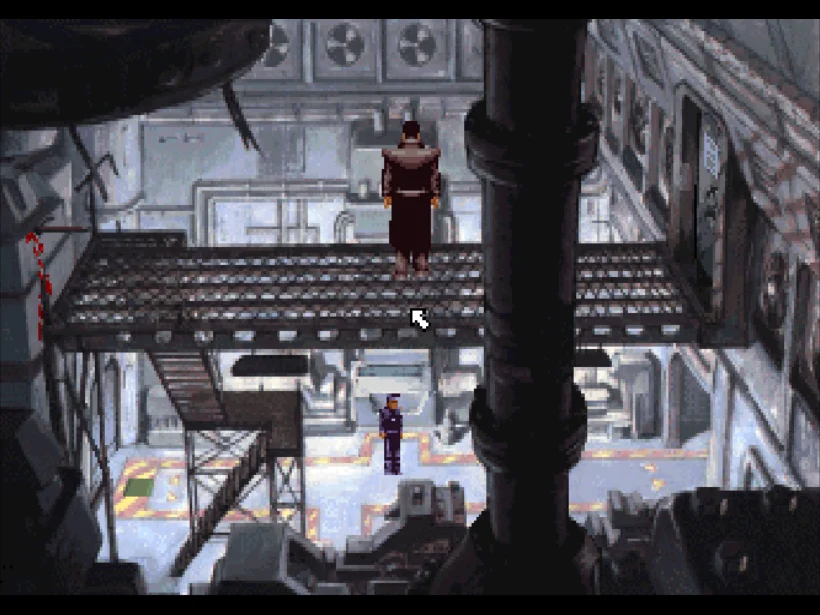
Three more DOS-era adventures run in ScummVM rather than DOSBox, because ScummVM reimplements their engines and lets the original game files run on modern systems: Beneath a Steel Sky, Revolution's cyberpunk adventure drawn by Dave Gibbons; Flight of the Amazon Queen, a 1940s-style comedy from Australia; and Sfinx, a Polish adventure about two kids and a stranded alien. Their rights holders released them as freeware through the ScummVM project, and our guide to freeware adventure classics covers them in depth.
Everything above is on the DOS platform page.
How DOSBox runs in your browser
DOSBox is a free emulator of an MS-DOS PC: it reproduces the processor, the graphics card, the Sound Blaster and AdLib sound cards and the DOS environment itself. FredyGames uses js-dos, which compiles DOSBox to WebAssembly so it can run inside a web page. When you click Play, the browser downloads the emulator and a small bundle containing the game and its settings, boots a virtual PC and starts the game automatically. Nothing is installed on your computer, and nothing loads until you click.
Controls and keyboard focus
DOS games were made for the keyboard, and each one chooses its own keys, so the controls are listed on every game page. Two habits help:
- Click the game picture once before you start typing, so your key presses go to the game and not to the page.
- Expect the whole keyboard to matter. NetHack uses almost every key, Sopwith uses comma, period and slash, and Electro Man uses F2 and F3 for its own save and load. Browser shortcuts that clash with a game, such as F5 for reload, are best avoided while playing.
The mouse and mouse capture
Most of our DOS games are played with the keyboard, but some use the mouse: Lure of the Temptress is played entirely with it, and the third player in Jump 'n Bump uses the mouse buttons. By default the player does not lock your pointer, so you can still reach the rest of the page. For games that need it, js-dos can capture the mouse: switch on the Capture mouse option in the player's settings, then click the game picture. While it is captured, the pointer belongs to the game. Press Esc to release it, as the player reminds you.
Saves
DOS games save the old-fashioned way: they write files to the hard disk of the virtual PC. NetHack's S command, Electro Man's F2 and the menus of the other games all work that way. The player keeps the changes to that virtual disk in your browser: it stores them automatically when you switch to another tab, leave fullscreen or release the mouse, and you can also press the save button in the js-dos sidebar at any time, which confirms with a "Saved in browser" message. The next time you open the game on the same browser, those changes are loaded back, and your save is there. Adventures of Robbo works differently: it shows a code every four planets, which you can write down and enter later to continue from there.
Like every save on FredyGames, these live only in your browser: clearing site data deletes them, and they do not follow you to another device. Our guide to playing retro games in your browser explains this in more detail.
Full screen and devices
The js-dos sidebar also has a full-screen button, which is the best way to see games that run at the low resolutions of the era, such as Electro Man or Sopwith. DOS games are best on a computer with a keyboard; on phones and tablets, most of them are hard to control. Behind the scenes, each game comes with its own DOSBox configuration file, which sets up the emulated PC, sound card included, for that game.
Where to start
For a quick game, try SkyRoads: each road is over in a minute or two, and you will want another go. For history, take off in Sopwith. For a challenge, Electro Man will test your patience, and Heartlight your planning. If you have a friend next to you, Liquid War and Jump 'n Bump are two of the best local multiplayer games of the DOS era. And if you have a few weeks to spare, NetHack is waiting.