Portugues
Game Boy and Game Boy Color homebrew today
Of all the classic consoles, the Game Boy may have the liveliest homebrew scene today. Every year brings new puzzle games, platformers, RPGs and experiments, many of them released as free software and some later sold on real cartridges. This guide looks at why the handheld is so popular with independent developers, what the Game Boy Color added, how the Game Boy Advance fits in, and which games from our catalogue show the scene at its best. All of them play in your browser.
Why developers love the Game Boy
The original Game Boy came out in 1989. Its hardware is modest even by the standards of its day: an 8-bit processor running at about 4 MHz, 8 KB of work RAM, and a 160×144 screen that shows four shades of grey-green. Graphics are built from 8×8 tiles on a background layer, an overlay layer called the window (often used for status bars), and up to 40 sprites, no more than ten of them on any one line. Four sound channels (two pulse waves, a channel that plays a short custom waveform and a noise channel) produce its distinctive chiptune sound.
Those numbers explain a lot of its appeal to hobbyists:
- It is small enough to understand completely. One person can learn the whole machine, from the memory map to the timing of each frame, and write a finished game alone.
- It is extremely well documented. Decades of community research are collected in references such as the Pan Docs and on the gbdev community's resources. Emulators are accurate and come with good debuggers.
- The tiny screen forgives small teams. A 160×144 image in four shades does not demand a lot of art, and a single developer can draw everything themselves.
- Real hardware is easy to find. Millions of units were sold, and flash cartridges let people play their own games on the original handheld.
The tools of the scene
There are three main ways to make a Game Boy game today, and our catalogue has examples of each.
- RGBDS is a free assembler and linker toolchain for writing games directly in the console's assembly language. It gives total control over every cycle and byte. µCity, Big2Small and Geometrix were all built with it.
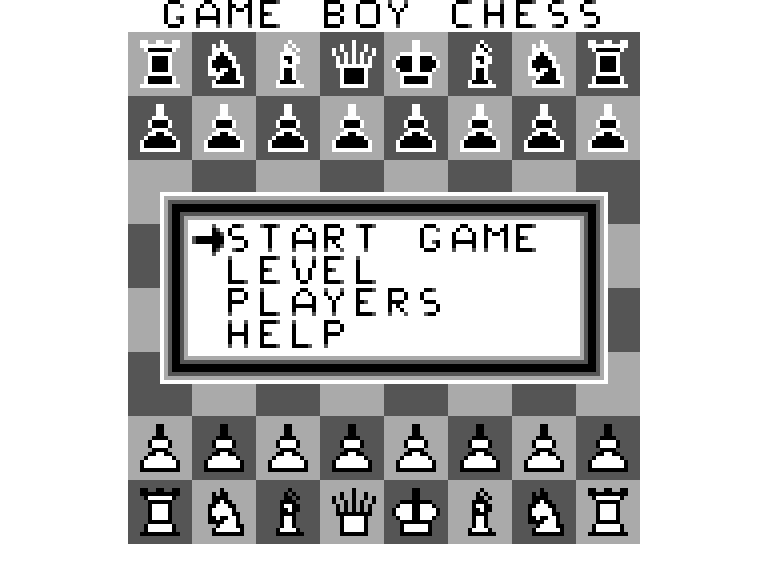
- GBDK-2020 is a C development kit, a modern continuation of the original GBDK from the late 1990s. It lets developers write most of a game in C and drop down to assembly where speed matters. Bit Bang, Game Boy Chess, Flooder, Little Green Blob and Unstoppable Knight were made with it.
- GB Studio is a free visual game creator. Developers build scenes, characters and logic through an editor and a system of events and scripts, and it produces a real Game Boy ROM. It opened Game Boy development to artists and designers who do not write code, though experienced users also extend it with plugins. Dusky Dungeon and Millennium Gun were made with it.
The community also runs regular contests. The Game Boy Competition, held by the gbdev community, has become a showcase for new releases, and several games on FredyGames were entries.
What the Game Boy Color added
The Game Boy Color arrived in 1998. It is backwards compatible with the original, but adds a lot for developers who target it directly:
- Real colour. The background can use eight palettes of four colours and sprites another eight, all picked from a range of 32,768 colours. Background tiles can choose their own palette, so each part of the screen can look different.
- More memory. Work RAM grows to 32 KB and video memory to 16 KB, which leaves room for more tiles and more detailed worlds.
- A faster mode. The processor can run at double speed when a game needs it.
A byte in each cartridge's header tells the handheld what kind of game it is. Some games are Game Boy Color enhanced: they run in grey on the original model and in full colour on the newer one. Others are Game Boy Color only and show a message if you try them on the original. FredyGames marks both kinds with a Game Boy Color badge on the game page. Our player runs enhanced games in colour, as a Game Boy Color would.
A tour of our Game Boy and Game Boy Color games
All of these are on the Game Boy platform page, which covers both the original handheld and the Color.
Action and platformers
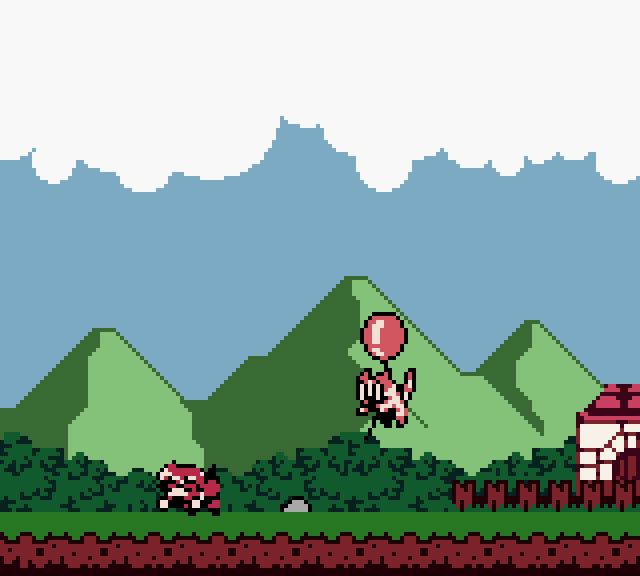
- Tobu Tobu Girl Deluxe is a vertical arcade platformer: bounce off enemies, dash and flap to climb towards your cat. It is one of the most polished open-source Game Boy games, colour-enhanced, with an original soundtrack. Its code is MIT and all of its assets are CC BY 4.0.
- Millennium Gun builds a whole platformer around recoil: every shot pushes your robot the other way, so shooting is also how you jump and dash. Made in GB Studio for the Game Boy Competition 2025.
- Little Green Blob gives you a hero that wears away as it crawls and splashes when it lands, so each level becomes a question of efficiency.
- Unstoppable Knight is a five-lane runner where the knight never stops, written with GBDK-2020 for the Game Boy Competition 2021.
- Dusky Dungeon is a small Game Boy Color-only dungeon crawl with keys, levers and a boss, made in GB Studio.
Puzzles
- Big2Small has three animals of very different sizes who must clear the way for each other to reach their snacks, across 40 puzzles with a par for each. A careful, charming design written in assembly.
- Libbet and the Magic Floor is Damian Yerrick's Game Boy version of a puzzle by Martin Korth, made with his permission: roll across a floor of shaded tiles and cover enough moves without trapping yourself.
- Bit Bang teaches binary without a lecture: reach a target number using only plus one, minus one and the two bit shifts. Its Assist Mode makes it a friendly introduction to how computers count.
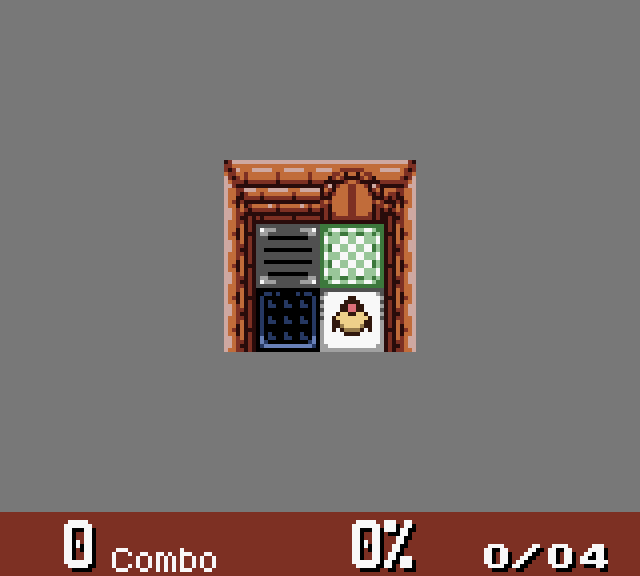
- Geometrix is a tile-matching puzzle with combo multipliers, and Flooder is a quick colour-flood game that fits a full round into a coffee break.
Strategy and classics
- µCity is a full city-building simulation on a Game Boy Color cartridge, with zoning, power, traffic, pollution and a yearly budget. It is a remarkable piece of assembly programming and a game you can lose hours to.
- Game Boy Chess fits all the rules of chess and a computer opponent with four levels into a 32 KB cartridge.
- Yatzy-GB is the classic dice game for one player, and Squishy the Turtle, a Ludum Dare game later updated, is a puzzle-adventure about choosing when to grow big or shrink small.
The next step: Game Boy Advance
The Game Boy Advance (2001) is a different machine: a 32-bit ARM processor, a wider 240×160 screen and thousands of colours on screen at once. It also has an active homebrew community, with modern tools that would have surprised its original developers. Our Game Boy Advance games show three of them:
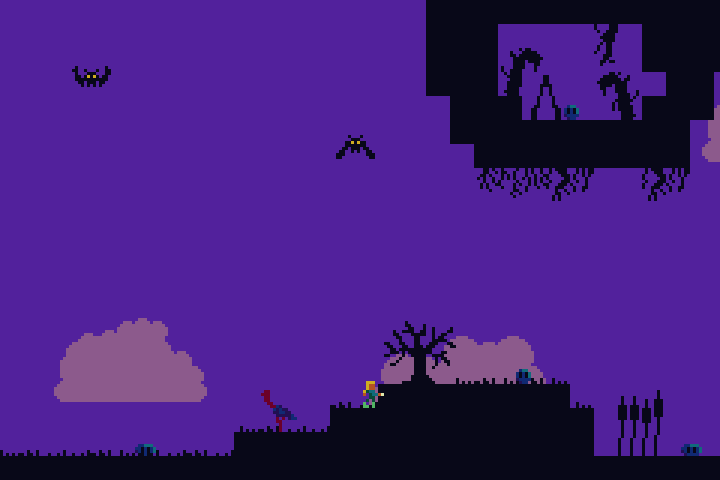
- agb, a library for writing GBA games in Rust, used by The Purple Night (an action platformer where your sword is your health bar), The Hat Chooses the Wizard, Hyperspace Roll, Blob Goes 3D and Nonogram Advance.
- Butano, a C++ engine, used by CASCADE7, a number-dropping puzzle built around chain reactions.
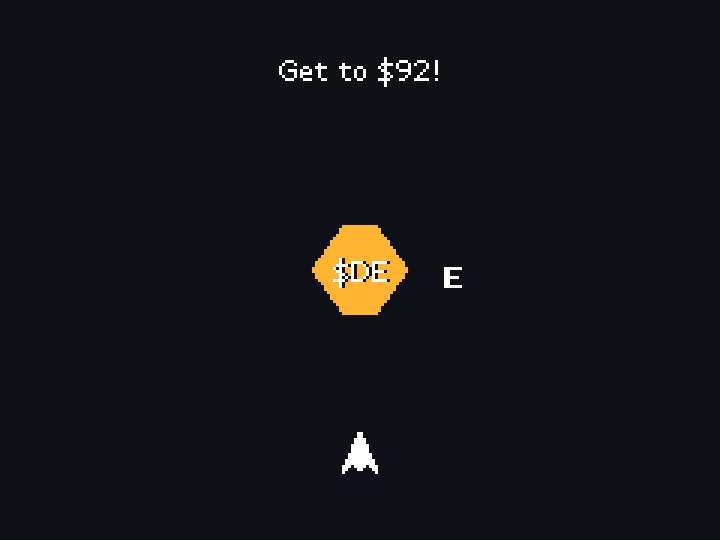
- Natu, a library for the Nim language, used by HEXES, an arcade shooter in which you do arithmetic in hexadecimal while dodging enemies.
Blob Goes 3D deserves a special mention: the GBA has no 3D hardware, so the game draws every flat-shaded block itself, frame by frame.
Saves, controls and licences
The Game Boy and Game Boy Color games run in binjgb, and the Game Boy Advance games in mGBA, both compiled to WebAssembly. Cartridge saves are kept automatically in your browser, and F2 and F4 save and load a snapshot at any moment. For keyboard layouts, gamepads and other practical tips, see playing retro games in your browser.
Every game here is released by its author under a licence that allows redistribution, including commercial use. When the licence is copyleft, as with the GPL games µCity, Big2Small and Geometrix, we host the full source code of the build we serve, and some ROMs we build ourselves from the authors' source. Our guide on how we check licences explains the process, and the texts are on the licences page.
Where to start
For a first taste, play Tobu Tobu Girl Deluxe for action and Big2Small for puzzles. If you have an evening free, start a city in µCity. And if you want to compare the handheld scene with its home-console cousin, read NES homebrew: where to start. For more background on what homebrew is and why these games exist, see what is homebrew?.