Portugues
What is homebrew? New games for old consoles
Most of the console games on FredyGames were made long after the consoles left the shops. They are homebrew: new games written by independent developers for old hardware, often decades after the last official release. This guide explains what the word means, why people keep doing it, how homebrew is different from the ROM sites that copy commercial games, and how you can support the people who make it.
What "homebrew" means
In the console world, homebrew means software made by people outside the official system. When the NES, Game Boy, Mega Drive or Atari 2600 were on sale, publishing a game normally required a deal with the manufacturer, a development kit and a factory to make cartridges. Homebrew developers have none of that. They work from public documentation, reverse-engineered knowledge shared by their community and free tools, and they write their games from scratch.
The result is a genuinely new game. It is not a copy, a hack or a modified version of a commercial cartridge. The code, graphics, music and story belong to the people who made them, which is exactly why those people can decide to let others share the game.
Homebrew is not limited to the classic consoles. Some platforms were built for it from the start: the Arduboy is a credit-card-sized handheld designed to be programmed by its owners, the Uzebox is a do-it-yourself console whose design is open, and "fantasy consoles" such as TIC-80 and WASM-4 are imaginary machines that exist only as software, with deliberately tight limits on colours, memory and screen size. They borrow the spirit of the old hardware without pretending to be it. We cover them in more depth in fantasy consoles explained and tiny open consoles: Arduboy and Uzebox.
Why make games for old machines?
There is no single answer, and asking a dozen developers would give you a dozen. A few reasons come up again and again.
- Limits are a creative tool. A Game Boy has four shades of grey on a tiny screen; an Atari 2600 has 128 bytes of RAM. With so little room, every idea has to justify itself, and many designers find that freeing rather than frustrating.
- Learning how computers really work. Writing for a console without an operating system means talking directly to the hardware: timing the picture, packing graphics into tiles, squeezing music into a few channels. Many developers say it taught them more than any course.
- Affection for a platform. Plenty of homebrew authors grew up with these machines and want to add something to their library, sometimes the game they wished had existed.
- Finishing something. A small console game can be completed by one person or a tiny team. Game jams and competitions give a deadline and an audience, and a surprising number of homebrew titles started as jam entries.
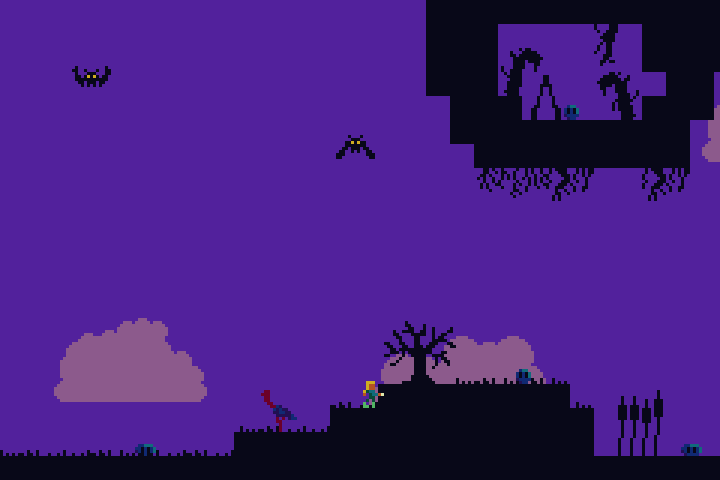
The tools have also improved. Today there are free assemblers, C compilers, graphics converters, music trackers and accurate emulators for every major retro system, plus forums and wikis full of documentation. Some developers even write in modern languages: The Purple Night for the Game Boy Advance was written in Rust using an open source library.
Homebrew is not a ROM site
This distinction matters, and it is the reason FredyGames can exist at all.
A ROM site offers copies of commercial games: the cartridges that companies sold, extracted and uploaded without the rights holders' permission. However old those games are, they are still protected by copyright, and calling them "abandonware" does not change that. Downloading or sharing them is a legal grey area at best, and usually not grey at all.
Homebrew is the opposite situation. The author owns the game and chooses how it may be used. Many publish their work under an open licence, which gives everyone written permission to copy and share it, sometimes along with the source code. When FredyGames hosts a homebrew game, it does so because the author's licence explicitly allows it, and every game page says which licence that is and where the author published the game. Our guide on how we check every licence explains the process in detail.
The emulators deserve a word too. An emulator is ordinary software that imitates a console, and writing one is legal. What matters is what you run in it. The emulators on this site run homebrew whose authors said yes, and the emulators themselves are also under licences that allow us to use them.
Open licences in a nutshell
Most of our homebrew games use one of a handful of licences. You do not need to be a lawyer to understand the basics:
| Licence family | What it allows | What it asks |
|---|---|---|
| MIT, BSD, zlib, ISC | Copying, sharing, changing, even selling | Keep the copyright notice and licence text |
| GPL | The same freedoms | Anyone who distributes the game must also offer its source code |
| CC0 / public domain | Anything at all | Nothing |
| CC BY, CC BY-SA | Sharing and adapting art, music and text | Credit the author; with SA, share adaptations under the same terms |
Code and assets are often licensed separately. Tobu Tobu Girl Deluxe, for example, has its code under MIT and its graphics, sound and music under Creative Commons Attribution, and µCity pairs GPL code with CC BY-SA art and music. When a licence such as the GPL requires the source code to travel with the game, FredyGames hosts that source next to it, and the licences page lists the details.
A tour of the catalogue
Homebrew covers every genre and every era of hardware. Here is a small selection from the platforms on FredyGames.
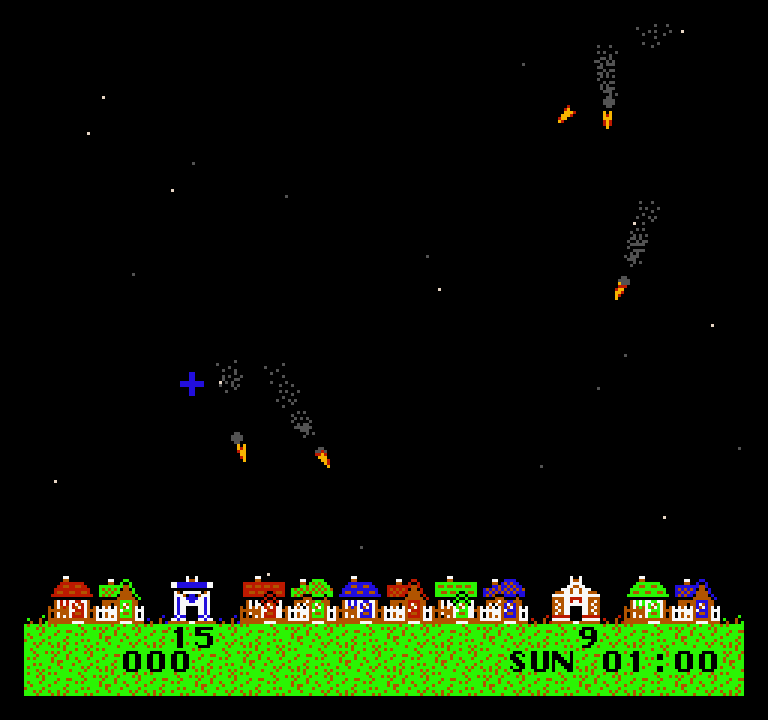
- Thwaite, NES. A missile-defence game in which you protect a row of houses with fireworks. Its author has released a long series of NES and Game Boy homebrew under free licences.
- Tobu Tobu Girl Deluxe, Game Boy. A vertical arcade platformer about bouncing off enemies to rescue a cat, remastered in colour for the Game Boy Color and released as open source.
- µCity, Game Boy Color. A full city-building simulation with zoning, power, traffic and budgets, squeezed onto a handheld cartridge.
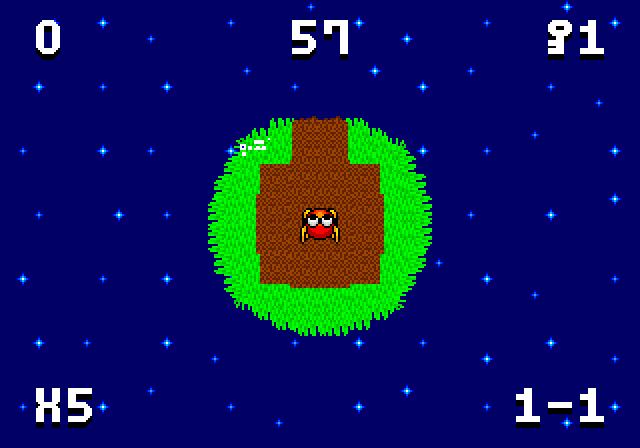
- Miniplanets REMIX, Mega Drive. A platformer in which every stage is a tiny planet whose ground curves away beneath your feet.
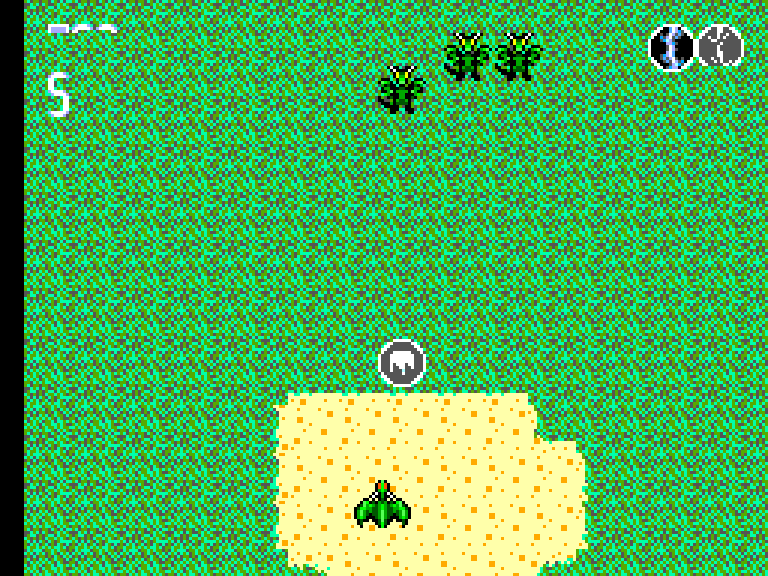
- Dragon Blaster, Master System. A one-minute score attack with a weapon system built on combining elements, using freely licensed art from OpenGameArt.
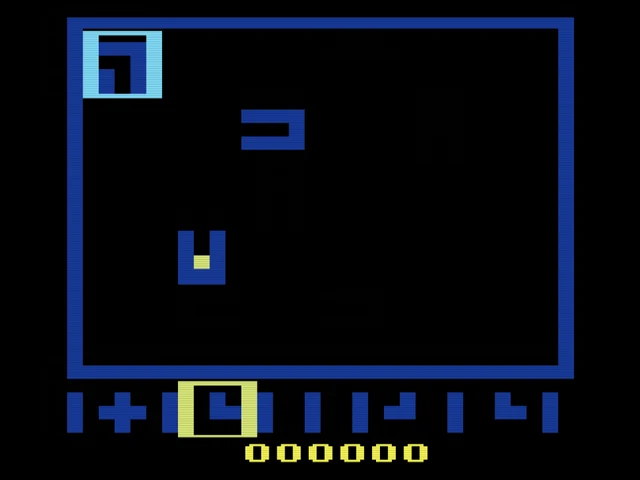
- Pipes 2600, Atari 2600. A race to lay pipe before the water arrives, on a console from 1977.
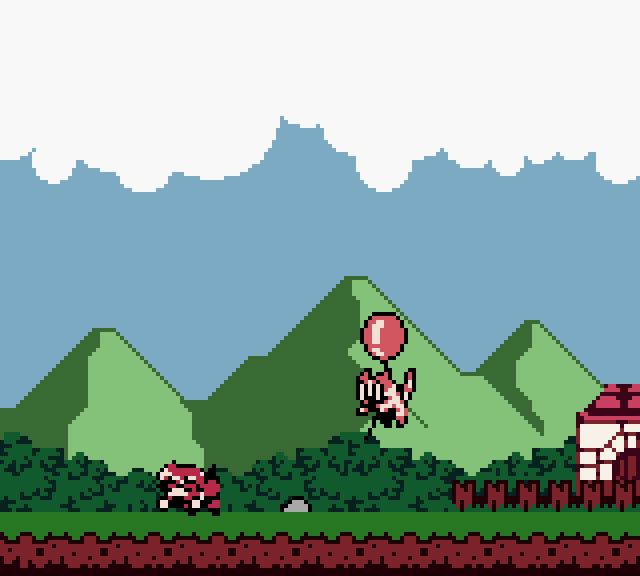
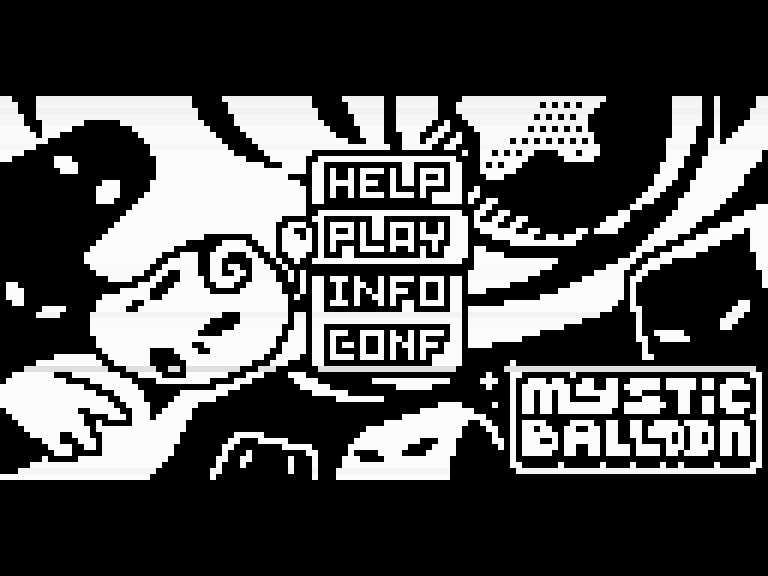
- Mystic Balloon, Arduboy. A platformer of maze-like levels in which your balloons are both your jump and your health.
- The Purple Night, Game Boy Advance. An action platformer where your sword is your health bar and shrinks every time you are hit.
If one platform catches your eye, our guides to NES homebrew and Game Boy homebrew today go further. Every one of these runs in your browser. If you are new to the players, our guide to playing retro games in your browser covers the keys, gamepads and saves for each system.
How to support homebrew authors
Homebrew is mostly a labour of love, and the people who make it rarely earn much from it. A few things make a real difference:
- Visit the author's own page. Every game page on FredyGames links to the place where the author published the game, whether an itch.io page, a personal website or a code repository. That is where updates, other games and contact details live.
- Pay what you want, if they ask. Many authors offer their games for free with an optional payment on itch.io. If you enjoyed a game, that is the most direct thanks.
- Buy physical editions. Some homebrew games are produced on real cartridges for the original consoles, by the authors or by small publishers. If you still own the hardware, it is a way to support the scene and get a lovely object.
- Leave feedback. A comment, a star on a repository or a well-written bug report is worth more than you might think to a solo developer.
- Share the game, the right way. Link to the author's page or to the game page here, and keep the credits and licence intact when you pass it on.
In short
Homebrew is new work by people who love old machines, and it is shared because its authors chose to share it. That is what separates it from copied commercial ROMs, and it is the foundation of everything on FredyGames. Pick a platform, press Play and, if a game wins you over, go and tell the person who made it. And if words appeal more than pixels, the beginner's guide to text adventures is a good next stop.